
The Women and Media Collective (WMC) is making remarkable strides in empowering young women in Sri Lanka through a range of feminist education programs. Targeting women aged 18 to 25, these initiatives encourage participants to engage with key feminist concepts, fostering leadership and social responsibility. With the Feminism Studies Program running from November 2021 to 2023, the focus is not only on academic learning but also on shaping a new generation of women advocates for gender equality.
The programs delve into vital topics such as patriarchy, gender roles, and equality, led by expert trainers like Ms. Sanjeevani Rupasinghe and Ms. Sumika Perera. Resources such as Nivedita Menon’s Seeing Like a Feminist, translated into Sinhala and Tamil, play a key role in making feminist theory more accessible to a wider audience.
In addition to education, WMC organizes various discussions addressing challenges like women’s portrayal in media and the intersection of feminism and sexuality. These dialogues empower young women to challenge societal norms and advocate for gender justice in their communities.
For more information, the brochure for the workshop is accessible here Stay engaged with WMC’s ongoing advocacy and educational efforts, as they continue to cultivate future feminist leaders in Sri Lanka.
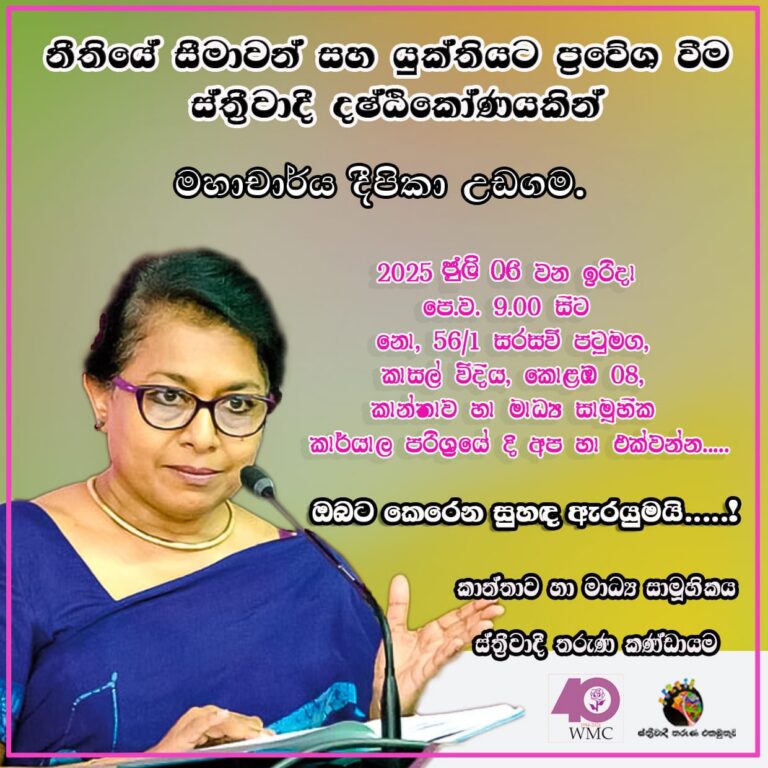
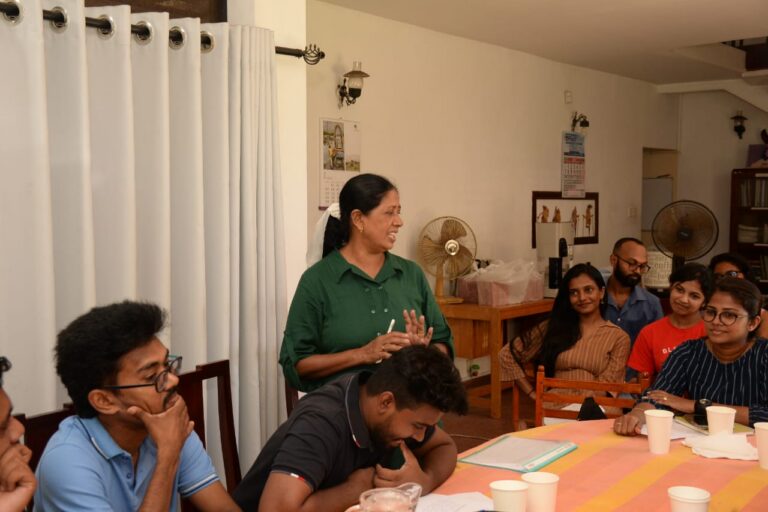
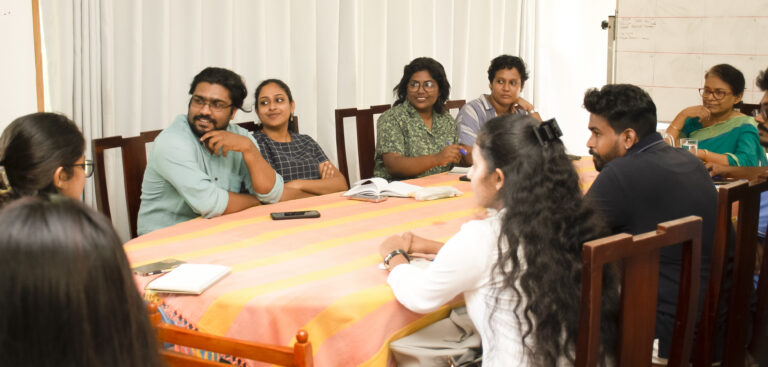
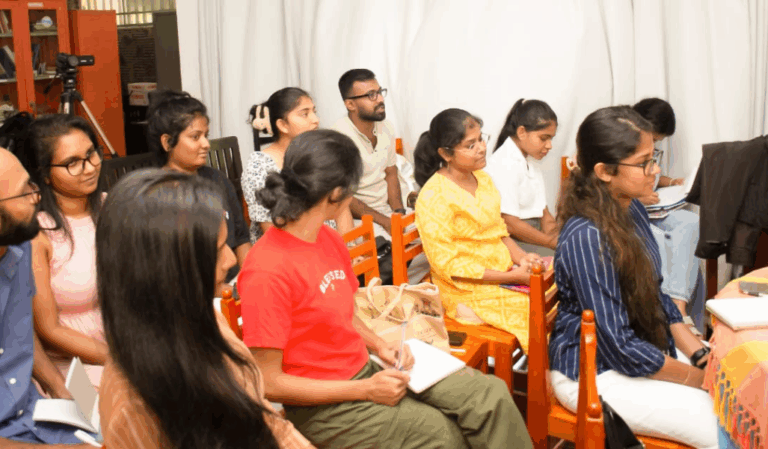
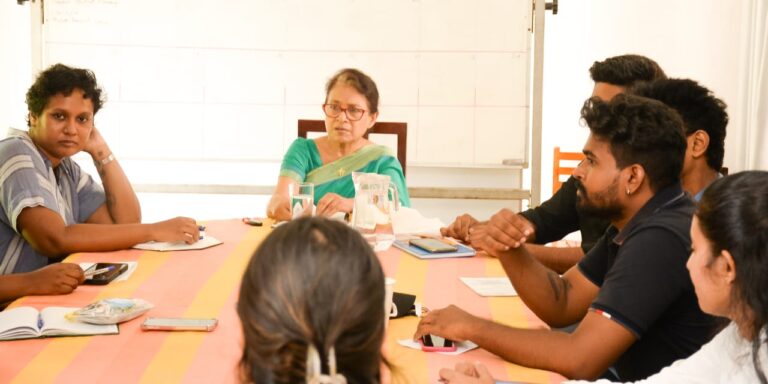
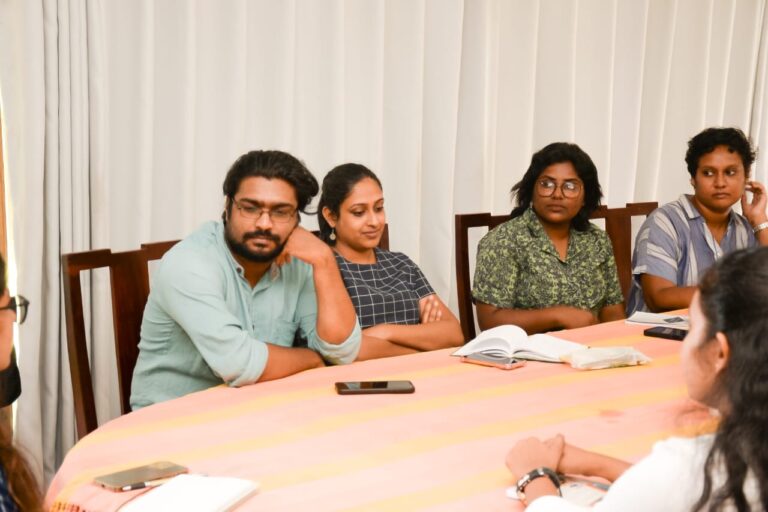
2025.07.06 දින පෙ.ව. 09.30 සිට ප.ව. 02.30 දක්වා “නීතියේ සීමාවන් සහ යුක්තියට ප්රවේශ වීම – ස්ත්රීවාදී දෘෂ්ටිකෝණයකින්” යන මැයෙන් කාන්තාව හා මාධ්ය සාමූහික පරිශ්රයේ මෙම සාකච්ඡාව පවත්වන ලදි.
මේ සාකච්ඡාව සඳහා ස්ත්රීවාදී තරුණ කණඩායමේ සාමාජික, සාමාජිකාවන් සම්බන්ධ වූ අතර, වයලා පෙරේරා මහත්මියගේ සම්බන්ධීකරන දායකත්වයෙන් යුතුව ප්රධාන සම්පත් දායකත්වය මහාචාර්ය දීපිකා උඩුගම මහත්මිය විසින් සපයනු ලැබී ය.
ක්ෂේත්රයේ ඇති ව ඇති සමාජ, ආර්ථික, දේශපාලන, සංස්කෘතික හා ආගමික යන අංශ ආවරණය කරමින් මේ වන විට පැන නැගී ඇති ගැටලු පිළිබඳ සාකච්ඡාව ආරම්භ විය. එහි දී කාන්තාව, කාන්තාව ලෙස ජීවත් වීම නිසා අසාධාරණයට පත්වන අවස්ථා පිළිබඳ උදාහරණ ගැඹුරින් සාකච්ඡාවට ගන්නා ලදී. එහි දී නීතිමය කරුණු වැදගත් වන ආකාරය පමණක් නොව, නීතිමය කරුණු නිසා ම කාන්තාවන් අසාධාරණයට පත් වන ආකාරය පිළිබඳ සාකච්ඡාවට ගැනිණි.
කාන්තාව පිරිමින් ලෙස හැසිරී තම අයිතිවාසිකම් දිනා ගැනීමේ පැරණි ආකෘතිය තුළ ඇති ගැටලුව ඉන් අනතුරුව ඉස්මතු කෙරිණි. විලාසිතා කරණය, චර්යා අනුකරණය ආදිය හරහා පුරුෂ අනුකරණය මගින් කාන්තා නිදහස ඉස්මතු කිරීම සීමිත උපයෝගීතාවක් සහිත බව මෙම සාකච්ඡාවෙන් ඉස්මතු විය.
විශේෂයෙන් ම ස්ත්රීවාදී අර්ථයෙන් පැමිණෙන පැරණි ආකෘති භාවිත කිරීමේ ගැටලුව ගැන විශේෂ අවධානයක් අප යොමු කළ යුතු බවත්, එසේ නොවන්නේ නම් ස්ත්රීවාදී ව්යාපෘතිය එම ආකෘති තුළ අවතැන් වීමට ඉඩ ඇති බවත් මින් පෙන්වා දෙනු ලැබී ය.
සෝල්බරි ආණ්ඩුක්රමය, ජනරජ ආණ්ඩුක්රමය හා 1978 ආණ්ඩු ක්රමය තුළ කාන්තා අයිතිවාසිකම් ආරක්ෂා කිරීමට ගත් වෙහෙස, ඒ සඳහා ඉදිරිපත් කර ඇති වගන්ති, එම වගන්තිවල ඇති ප්රායෝගික උපයෝගීතාව ගැන උදාහරණ සහිත සාකච්ඡා සිදු විය. 1978 ව්යවස්ථාව මූලික අයිතිවාසිකම් පිළිබඳ වැඩි අවධානයක් යොමු කළත්, ප්රායෝගිකව එම සංකීර්ණ සමාජ ක්රමයට සාපේක්ෂව එම අයිතිවාසිකම් කොතරම් ක්රියාත්මක වූවා ද යන්න ගැටලු සහගත බව මින් කතාබහට යොමු විය.
කාන්තාවට දේශපාලන අයිතිවාසිකම් හිමි නො වීමේ ගැටලුව ඉන් අනතුරුව මතු කෙරිණි. විශ්වවිද්යාලවල ශිෂ්ය දේශපාලනය තුළ කාන්තා නියෝජනයේ අඩුව, ප්රාදේශික සංවිධානවල ප්රබල සමාජ ක්රියාකාරිනියන් වෙත දේශපාලනික බලය පිරි නොනැමීමේ ගැටලු එහි දී අවධානයට ගැනිණි.
අධ්යාපනික ක්ෂේත්රය සම්බන්ධ විද්යාධිපතිවාදය, කලාව පරයා ඉදිරියට එන ආකාරයත්, කාන්තා අයිතිවාසිකම් එවැනි ස්ථානවල සැඟවීමට ඇති අවදානම පිළිබඳවත් මහාචාර්යතුමිය සහේතුක ව පැහැදිලි කළා ය.
විශ්වවිද්යාලයේ ශිෂ්යයන් අතර ශිෂ්යාවන් අතර ඇති සම්බන්ධය පිළිබඳ පැනය සභාවෙන් මතු වුණේ ඔය අතර ය. එය අතිශය හෙජමොනික සම්බන්ධයක් වන බවත්, කාන්තාවන් පාලනය කිරීමට වෙනත් පාර්ශවයක් සිටිය යුතු ය යන අදහස විශ්වවිද්යාලය පුරා පැතිර ඇති බවත්, සමස්ත විශ්වවිද්යාල පද්ධතිය එකී අදහස මඟින් ගිලගෙන ඇති බව ද සමස්තයේ අදහස විය. බොහෝ දෙනා ඒ පිළිබඳ තම අත්දැකීම් එම සාකච්ඡාවට එකතු කළහ.
ලිංගික අධ්යාපනය හා කාන්තා අයිතිවාසිකම් සුරක්ෂිත කිරීම පිළිබඳ කතාබහ අතුරු කතාවක් ලෙස මින් මතු කෙරිණි. ලිංගික අධ්යාපනය සම්බන්ධ කතිකාවත ඉදිරියට ගෙන ඒමට විරුද්ධ වන පුරුෂාධිපත්ය ක්රමය පසුගිය කාලයේ ක්රියාත්මක වූ ආකාරය පිළිබඳ අදහස් සභාවෙන් ඉදිරිපත් විය.
දෙමාපියභාවය හා කාන්තා අයිතිවාසිකම් සුරක්ෂිත කිරීම පිළිබඳ කතාබහ මෙහි තීරණාත්මක ක්ෂේත්රයක් වන බව අවධාරණය කෙරිණි. විශේෂයෙන් ප්රාථමික සමාජ සංවිධාන ලෙස දරුවන් සමාජානුයෝජනය නියෝජනය කරන්නේ පවුල, පාසල ආදියෙනි. මෙම ආයතන විසින් ම කාන්තා අයිතිවාසිකම් අවතක්සේරු කිරීම නැවැත්විය යුතු බවත්, එසේ නොවන්නේ නම් එම දෘෂ්ටිවාදය සමාජගත කිරීම පහසු නොවන බවත් මින් නිගමනය විය.
කාන්තාවන් සවිබල ගැන්වීම මෙහි දී අතිශය තීරණාත්මක සාධකයක් වන බවත්, හම්බන්තොට කාන්තා මහා සම්මේලනය එහි ඉතා සුවිශේෂ සන්ධිස්ථානයක් සනිටුහන් කරන බවත් ඉස්මතු විය. විශේෂයෙන් ම හම්බන්තොට කාන්තා මහා සම්මේලනය ක්රියාත්මක වූ ආකාරය, ඔවුන් සිදු කරගෙන ගිය සැලසුම්, ඔවුන්ගේ අරමුණු හා ඉලක්ක, ඔවුන් සමාජයට මුහුණ දුන් ආකාරය ආදිය උදාහරණයට ගෙන මහාචාර්යතුමිය මෙකී සන්දර්භය විස්තර කළා ය.
අධ්යාපනයේ අරමුණ පෞරුෂය සකස් කිරීම බවත්, නමුත් අද අධ්යාපනයේ අරමුණ ආර්ථිකමය සංකල්පයකට කොටුව ඇති ආකාරයක්, ඒ නිසා පෞරුෂ සංවර්ධනය බිඳ වැටීම හරහා කාන්තාවන්ට සිදුවන පසුකාලීන හානිය පිළිබඳවත් විශේෂ වශයෙන් සාකච්ඡා කෙරිණි. ආකෘතිගත අධ්යාපනය, ප්රායෝගිකත්වය නොදත් ගුරුවරු, ප්රමිතිගත නොවූ විෂය මාලා සංවර්ධනය සමාජයේ සංවර්ධනය හා යහපත් ආකල්ප හිතාමතා බිඳ වට්ටවයි. මෙවැනි ක්ෂේත්ර ස්ත්රීවාදී ක්ෂේත්රය අරභයා ඇති අභියෝග වේ. සහතික පත්ර පාඨමාලා අරමුණු කරගත් අධ්යාපනික ක්රමය හරහා කිසිදා ස්ත්රී අයිතිවාසිකම් වැනි යහපත් ආකල්ප කාන්දු කළ නොහැකි වීමේ හානිය අනාගත පරපුර කෙසේ බලපායි ද යන්න මින් කේන්ද්රීය වශයෙන් අවධානයට ගැනිණි.
A focused discussion session with Professor Deepika Udugama took place on 6th July 2025, from 9:30 a.m. to 2:30 p.m., at the Women and Media Collective premises.
Feminist Youth members participated in this discussion, with the main resource contribution provided by Professor Deepika Udugama, with the coordination contribution of Ms. Viola Perera.
This discussion, which centered on the legal field, was titled “Legal Limitations and Access to Justice – From a Feminist Perspective.”
The session commenced with a welcome address by Mrs. Viola Perera, followed by an introduction of the resource person delivered by Ms. Ishani. Thereafter, the discussion began with the participation of all those present, led by the chairperson, Professor Deepika Udugama.
The discussion was focused on the issues that have arisen in the field, covering the social, economic, political, cultural, and religious aspects. In it, examples of cases where women are treated unfairly for living as women were discussed in depth. Not only how legal issues are becoming important, but also how legal issues themselves are treated unfairly was discussed.
The discussion then highlighted the problems of the earlier model in which women were expected to adopt traditionally male behaviors in order to claim their rights. Further, it emphasizes women’s freedom through the imitation of men, whether through style, behavior, or conduct, has only limited usefulness.
This point out that we need to critically examine the problems related to the continued use of old or outdated models, particularly those framed within feminist terminology, as there is a risk that the feminism project itself may become confined or displaced within those very models.
The discussion then turned to examples of the efforts made to protect women’s rights in the Soulbury Constitution, the Republic Constitution, and the 1978 Constitution, considering the articles presented for that purpose, and the practical utility of those articles. Although the 1978 Constitution paid more attention to fundamental rights, the discussion raised concerns about the extent to which these rights have been practically realized, especially in relation to the complexities of the existing social structure.
The discussion also brought out the issue of women being denied political rights. The lack of women’s representation in student politics at universities and the lack of political power in local organizations were brought to the attention of the participants.
The professor logically explained how scientism in the educational field is advancing beyond art and the risk of women’s rights being hidden in such places.
The question of the relationship between male and female students at the university was also raised at this point. It was collectively observed that this represents a deeply hegemonic relationship, and that the idea that there should be a separate party to govern or control women widely had spread across the university, and that this idea had been internalized across the entire university system. Most of the participants added their experiences to this point.
Following that, a side discussion was carried out regarding the importance of sex education and protecting women’s rights. It brought forward views on how the patriarchal system has operated in the past, to resist the advancement of discourse related to sex education.
It emphasized that parenthood and the protection of women’s rights form a crucial area of concern. In particular, institutions such as the family and school, which serve as primary socializing agents for children, were identified as central to this process. Furthermore, it was concluded that these institutions themselves must stop underestimating women’s rights, as failure to do so would make it difficult to socialize such ideology within the broader process of socialization.
Women’s empowerment was considered another crucial factor here, and the Hambantota Women’s Development Federation marks a very special milestone in this regard. Professor Udugama explained this context by specifically citing the way the Hambantota Women’s Development Federation functioned, the plans they carried out, their goals and objectives, and the way they faced society.
Specifically, this discussion highlighted that the purpose of education is to shape the personality, but today, the purpose of education is framed in a way that is tied to an economic concept, and consequently, the subsequent harm caused to women through the breakdown of personality development. It was discussed that formative education, teachers lacking practical knowledge, and non-standardized curriculum development intentionally and unintentionally destroy social development and progressive values. These issues pose significant challenges to feminist efforts in the field. Furthermore, it was emphasized that an education system centered on certification and curriculum goals consequently damages the future generations by making it difficult to instill positive values such as women’s rights.
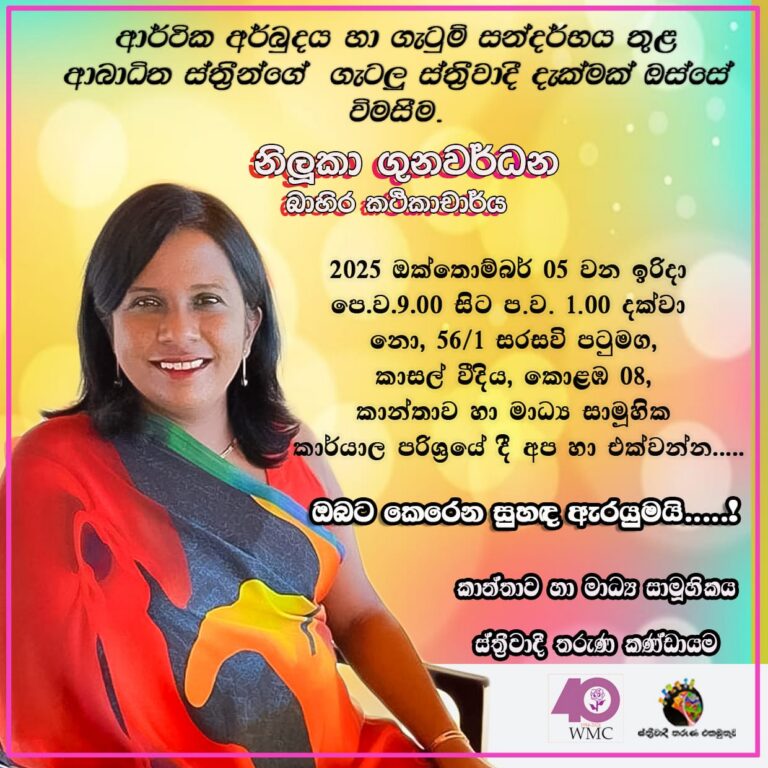
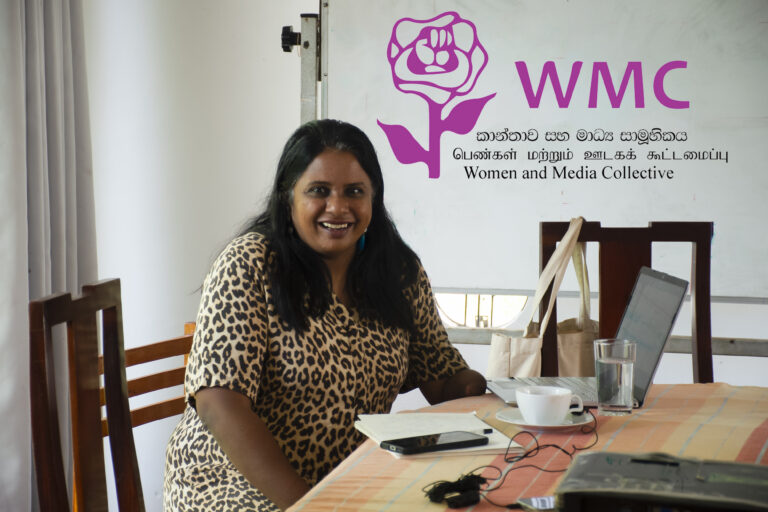
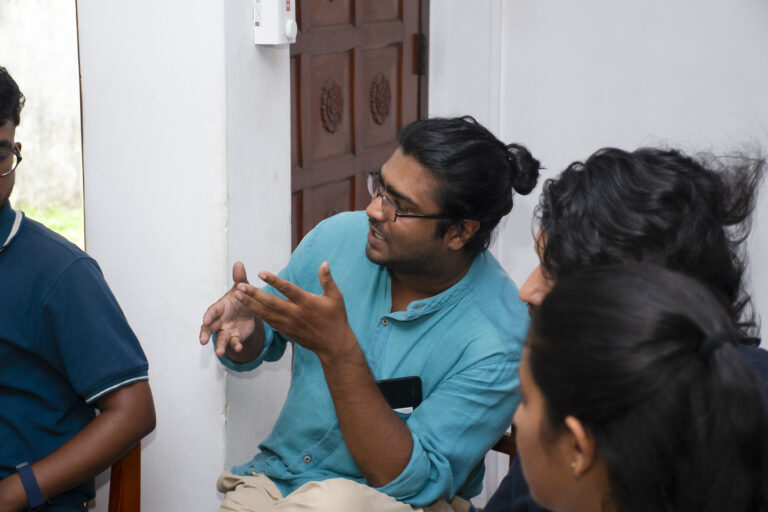
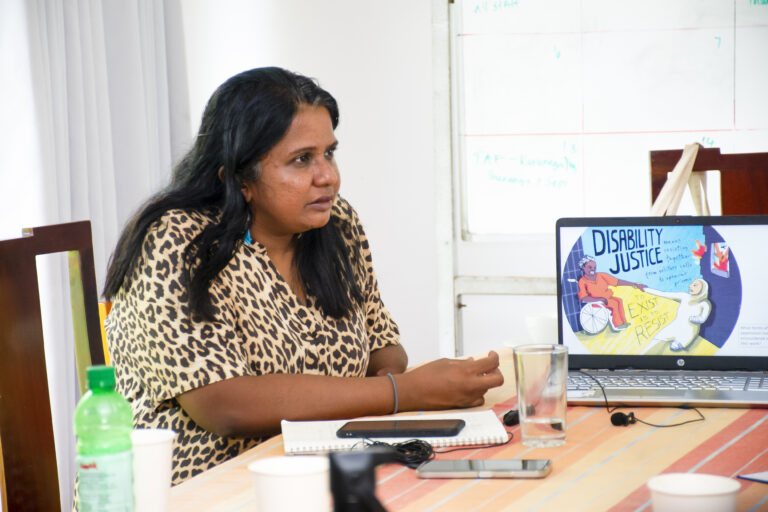
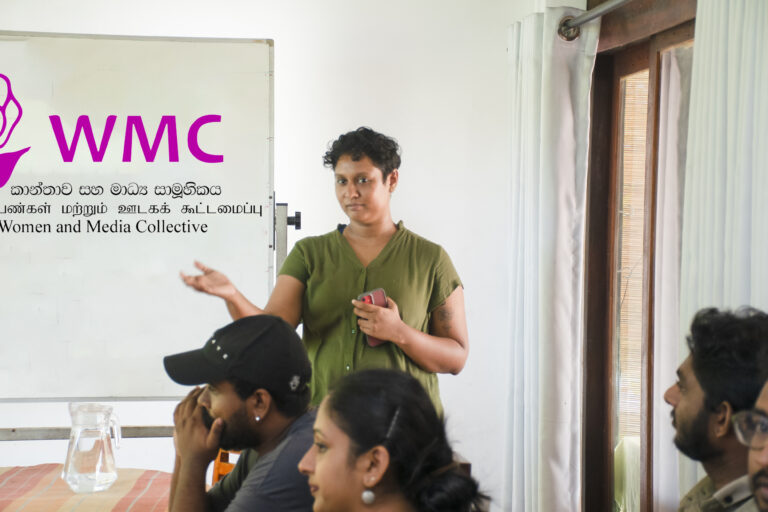
2025 ඔක්තෝබර් 5 වන දින නිලූකා ගුණවර්ධන මහත්මිය විසින් “තීරණාත්මක ආබාධිතභාවයක් සහ ස්ත්රීවාදී කාචයක් හරහා සමකාලීන ගැටළු පරීක්ෂා කිරීම” පිළිබඳ සිත්ගන්නාසුළු, තරමක් දුර්ලභ දෘෂ්ටිකෝණයක් ඉදිරිපත් කර ඇති අතර, ආර්ථික අර්බුදයේ සහ ගැටුමේ ප්රධාන ගැටළු සාකච්ඡා කිරීම සඳහා තරුණ තරුණියන්ට සංවාද අවකාශයක් විවෘත කර ඇත.
මෙම සැසි ඉතා අන්තර්ක්රියාකාරී සහ සංවාද පදනම් කරගත් අතර, සහභාගිවන්නන්ට පුද්ගලික තීක්ෂ්ණ බුද්ධිය සහ සාමූහික හුවමාරුව හරහා ගැටළු සමඟ විවේචනාත්මකව සම්බන්ධ වීමට ඉඩ සලසා ඇත. ආබාධිතභාවය සහ සුළුතර සමාජ ක්රියාකාරිත්වය පිළිබඳ සියුම් ඉදිරිදර්ශන සාකච්ඡා මගින් ඉදිරිපත් කරන ලද අතර, අවබෝධයේ සහ දැනුවත්භාවයේ සංකල්පීය වෙනසක් පිළිබිඹු කරන ලදී. මෙම සාකච්ජාවේදී තරුණ පිරිමින් විශේෂයෙන් විවෘතව කතා කළ අතර, කණ්ඩායම පුරා හොඳින් සමතුලිත මට්ටමේ සහභාගීත්වයකට දායක විය.
කියවීමේ කණ්ඩායම්වලට බ්ලොග් සටහන් සහ ලිපි හරහා ලිංගික වැඩ සහ ආබාධිතභාවය වැනි සංවේදී මාතෘකා ආමන්ත්රදණය කළ හැකි අතර, දැනුවත් සාකච්ඡාව සඳහා ආරක්ෂිත අවකාශයන් නිර්මාණය කළ හැකි බවත් චිත්රණපට තිරගත කිරීම් සහ අනෙකුත් ශ්රචව්යක දෘශ්යා, සාහිත්යය සහ කලා පාදක මාධ්යා හරහා සම්බන්ධතාවය තවදුරටත් ශක්තිමත් කළ හැකි අතර, එමඟින් පරාවර්තනය සහ සහභාගීත්වය වැඩි දියුණු කළ හැකි ආකාරය පිලිබදව ඇය පැහැදිලි කළාය.
Mrs. Niluka Gunawardena presented an interesting and rare viewpoint on “Examining Contemporary Issues through a Critical Disability and Feminist Lens” on October 5, 2025. She opened up a dialogue space for young people to discuss major issues like the economic crisis and conflict.
These sessions were highly interactive and based on conversation. This allowed participants to engage critically with the issues through personal insights and collective exchange. Nuanced perspectives on disability and minority social activism were presented, reflecting a conceptual shift in understanding and awareness. Young men spoke especially openly during this discussion, contributing to a well-balanced level of participation across the group.
She explained how reading groups can address sensitive topics like sex work and disability through blog posts and articles, creating safe spaces for informed discussion. She also noted that connection could be further strengthened through film screenings and other audio-visual, literature, and art-based media, thereby enhancing reflection and participation.
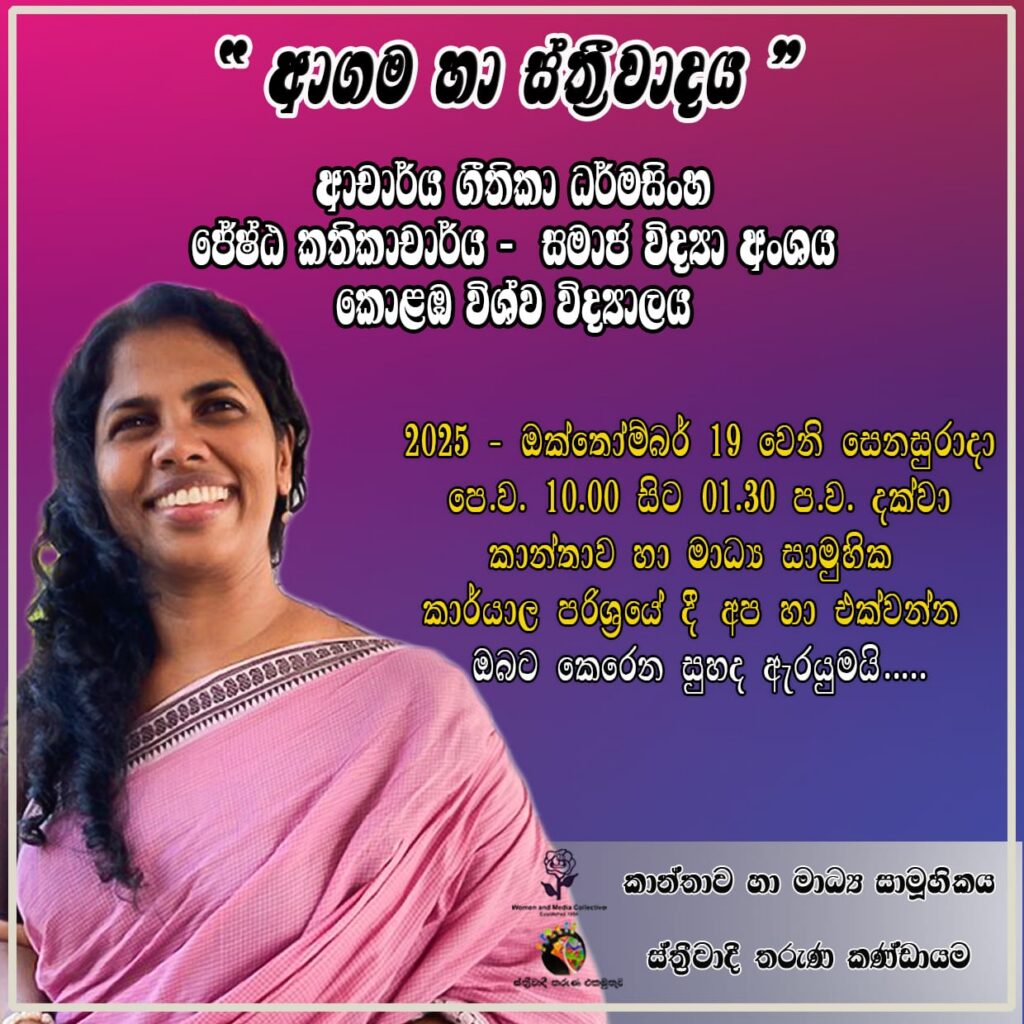
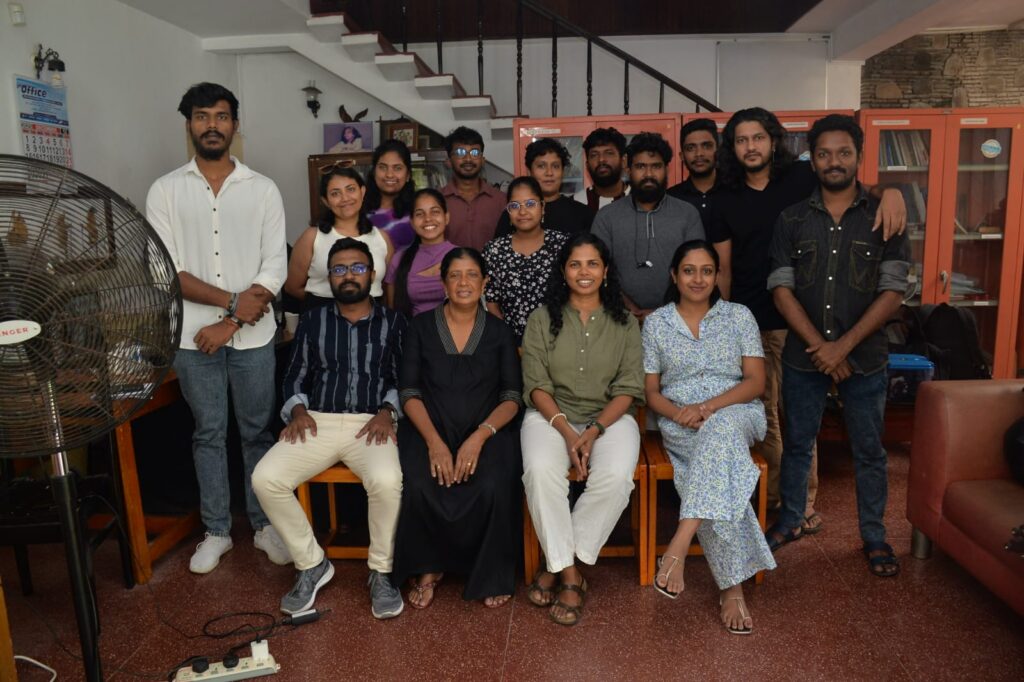
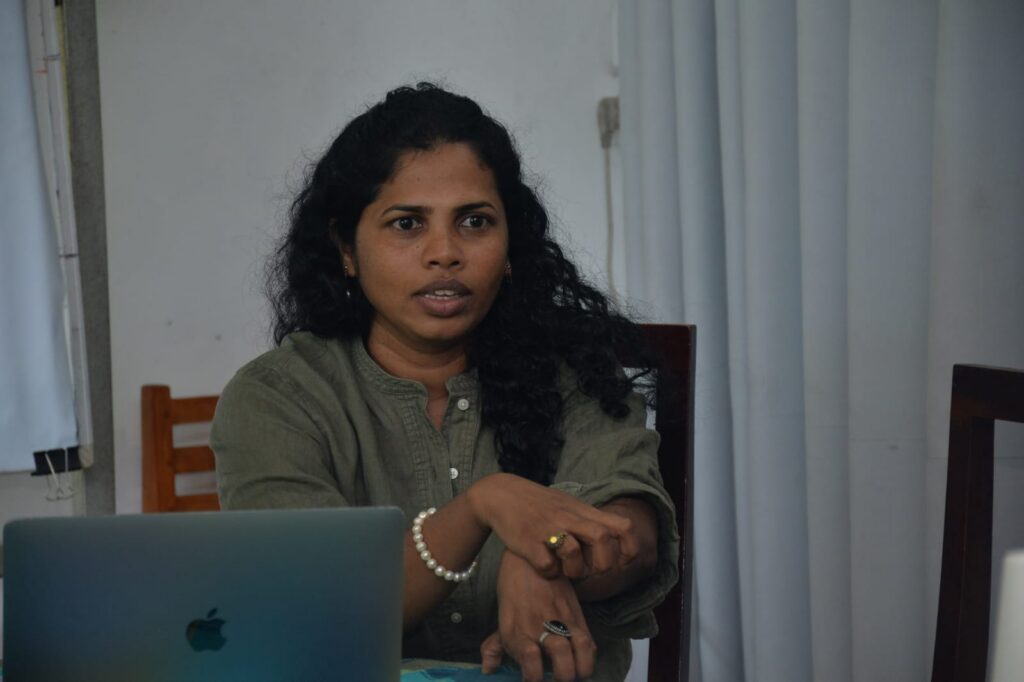
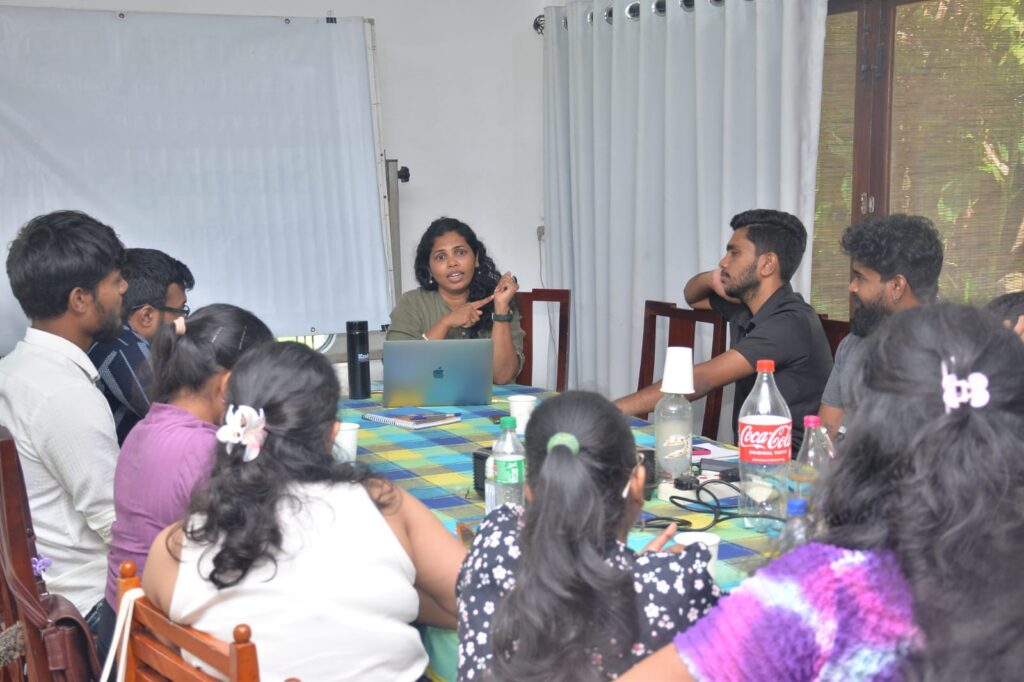
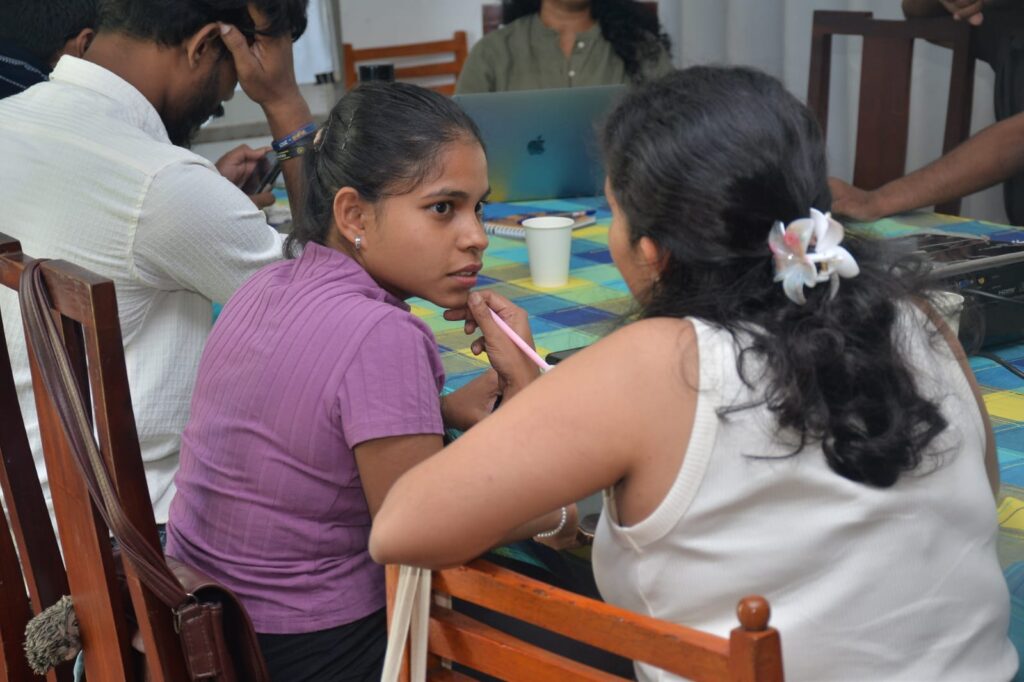
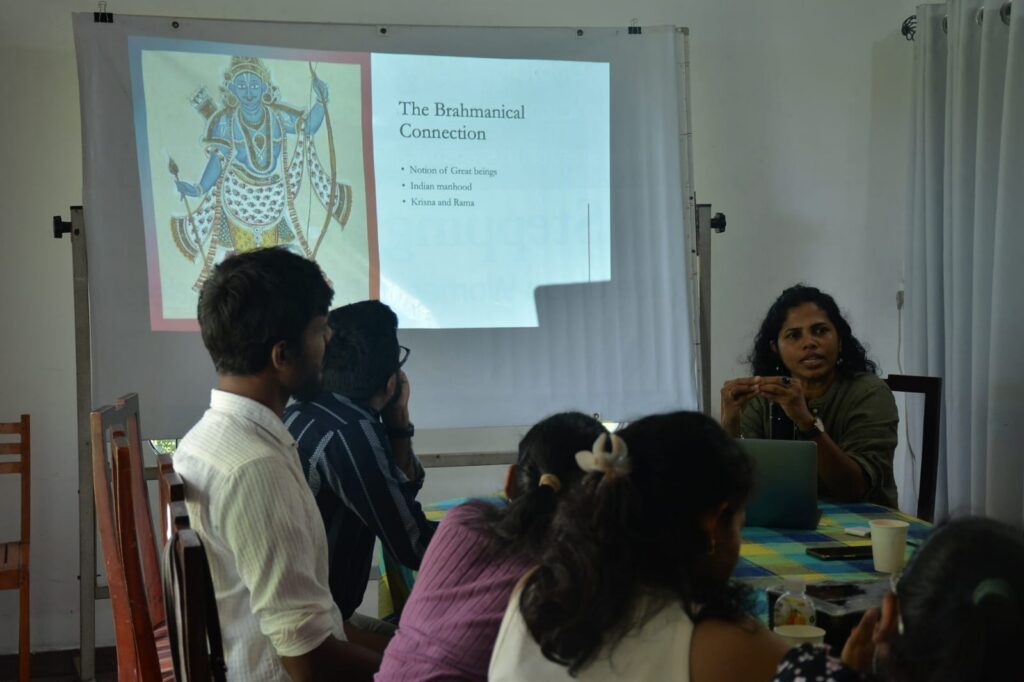
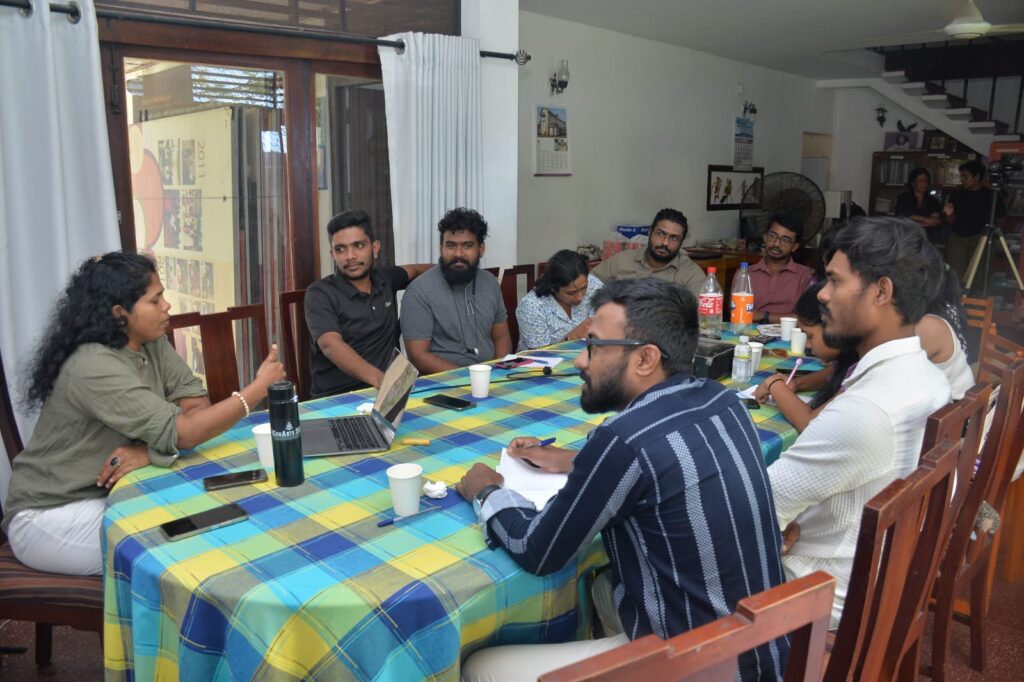
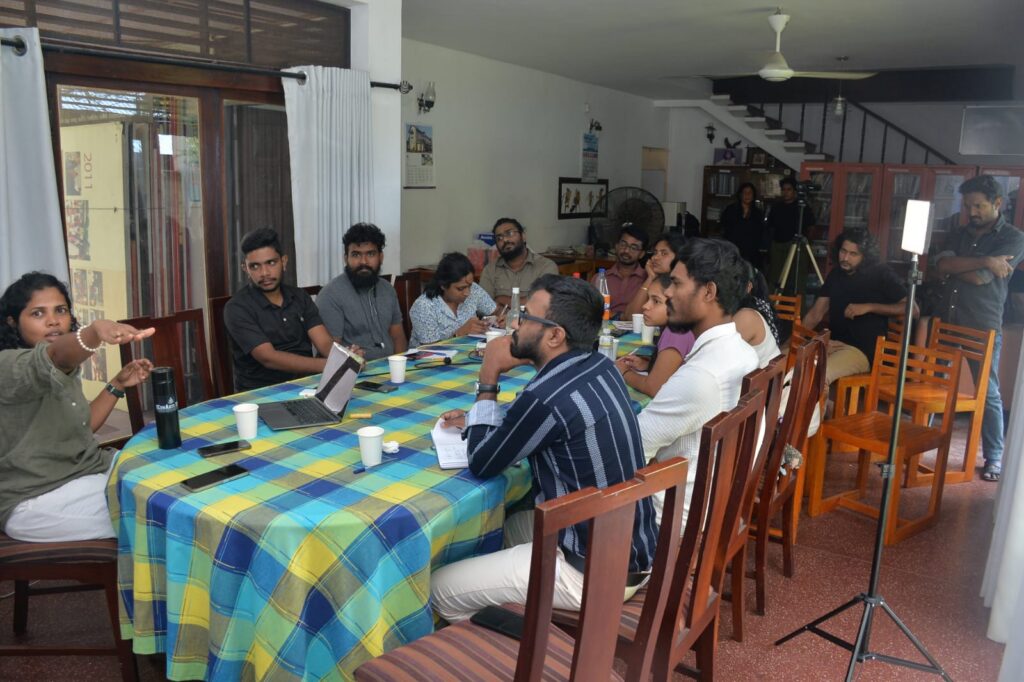
කොළඹ විශ්ව විද්යාලයේ ආචාර්ය ගීතිකා ධර්මසිංහ මහත්මිය 2025 ඔක්තෝබර් 19 වන දින තරුණ තරුණියන්ට සහ තරුණියන්ට ආර්ථික අර්බුදයේ සහ ගැටුම්වල ප්රධාන කරුණු සාකච්ඡා කිරීම සඳහා සංවාද අවකාශයක් විවෘත කරමින් “ආගම සහ ස්ත්රීවාදය” පිළිබඳ අද්විතීය තේමාත්මක සහ අන්තර්ක්රියාකාරී සංවාදයක් ද ඉදිරිපත් කළාය. සැසි ඉතා අන්තර්ක්රියාකාරී සහ සංවාද පදනම් කරගත් අතර, සහභාගිවන්නන්ට පුද්ගලික තීක්ෂ්ණ බුද්ධිය සහ සාමූහික හුවමාරුව හරහා ගැටළු සමඟ විවේචනාත්මකව සම්බන්ධ වීමට හැකි විය. ආචාර්ය ගීතිකා බෞද්ධයන්, හින්දු භක්තිකයන් සහ ක්රිස්තියානීන් ඇතුළු කණ්ඩායමේ විවිධ සංයුතිය ඉස්මතු කළ අතර කියවීමේ කණ්ඩායම්, බ්ලොග් සටහන් සහ ස්ත්රීවාදී කතිකාවේ අඛණ්ඩ අඛණ්ඩ පැවැත්මේ වටිනාකම අවධාරණය කළාය. සිදුවීම් හොඳින් සංවිධානය වූ බවත්, තරුණ සහභාගීත්වය ශක්තිමත් බවත්, අන්තර් ආගමික සහභාගීත්වය වඩාත් පුළුල් ලෙස ප්රවර්ධනය කිරීමේ වැදගත්කම අවධාරණය කළ බවත් ඇය සඳහන් කළාය.
Dr. Geethika Dharmasinghe from the University of Colombo also presented a unique thematic and interactive dialogue on “Religion and Feminism” on October 19, 2025. This opened up a conversation space for young men and women to discuss the main points of economic crises and conflicts.
The sessions were highly interactive and dialogue-based. Participants were able to engage critically with the issues through personal insights and collective exchange.
Dr. Geethika highlighted the diverse mix of the group, which included Buddhists, Hindus, and Christians. She also emphasized the value of reading groups, blog posts, and the continuous continuation of feminist discourse. She noted that the events were well-organized, youth participation was strong, and emphasized the importance of promoting inter-religious participation more widely.
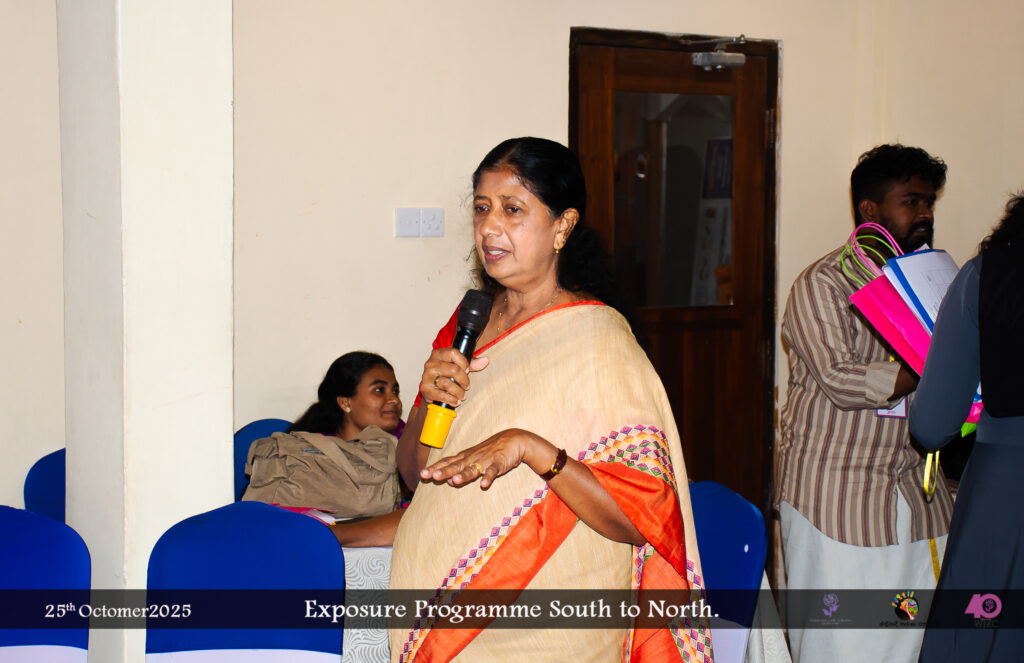
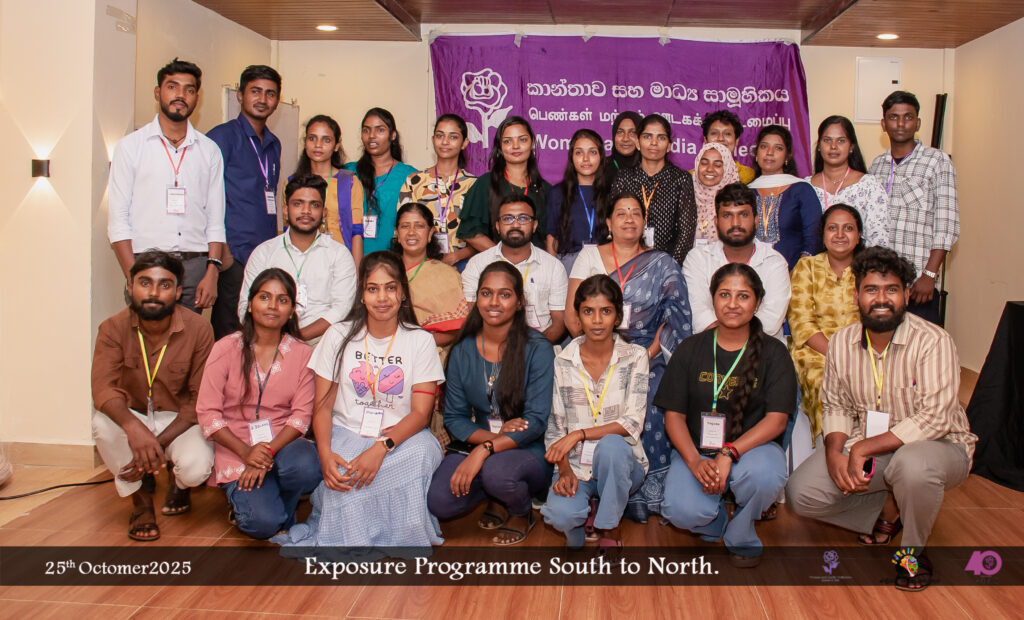
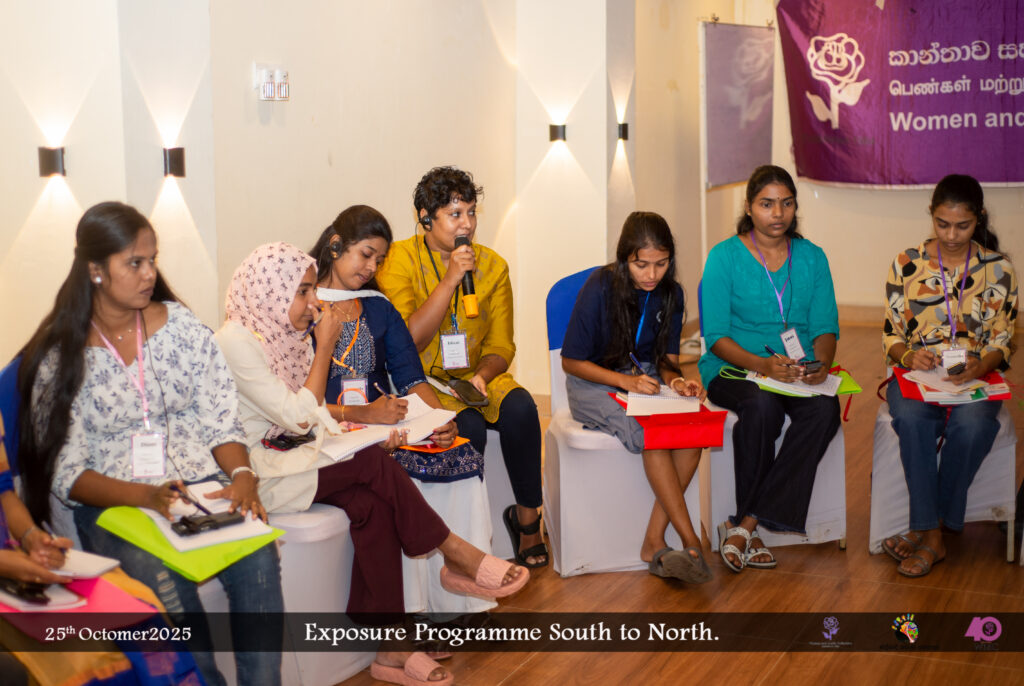
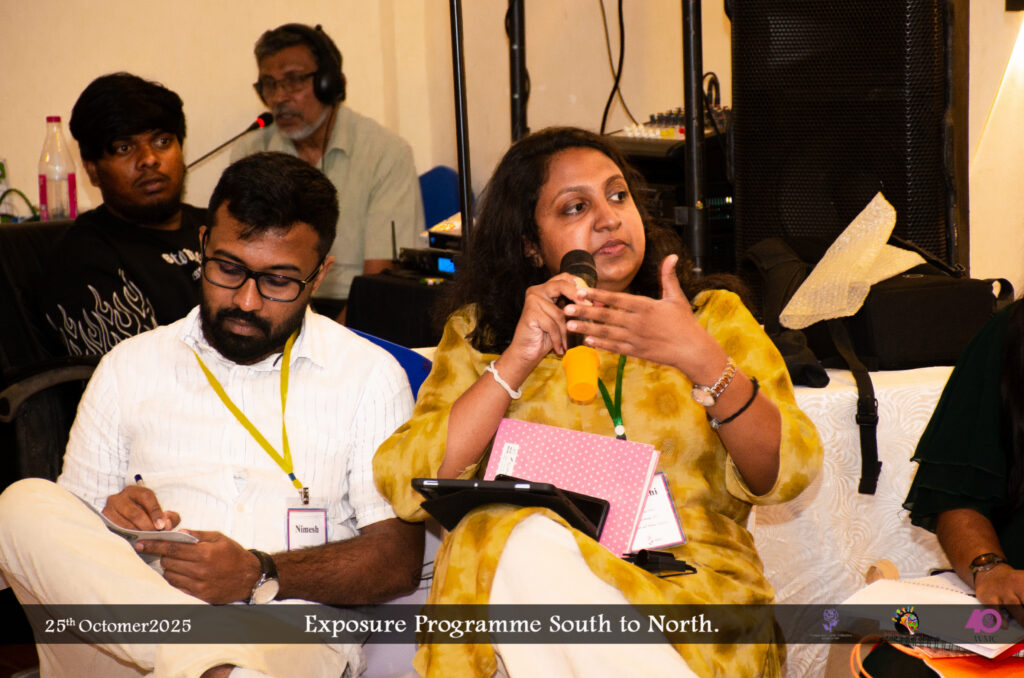
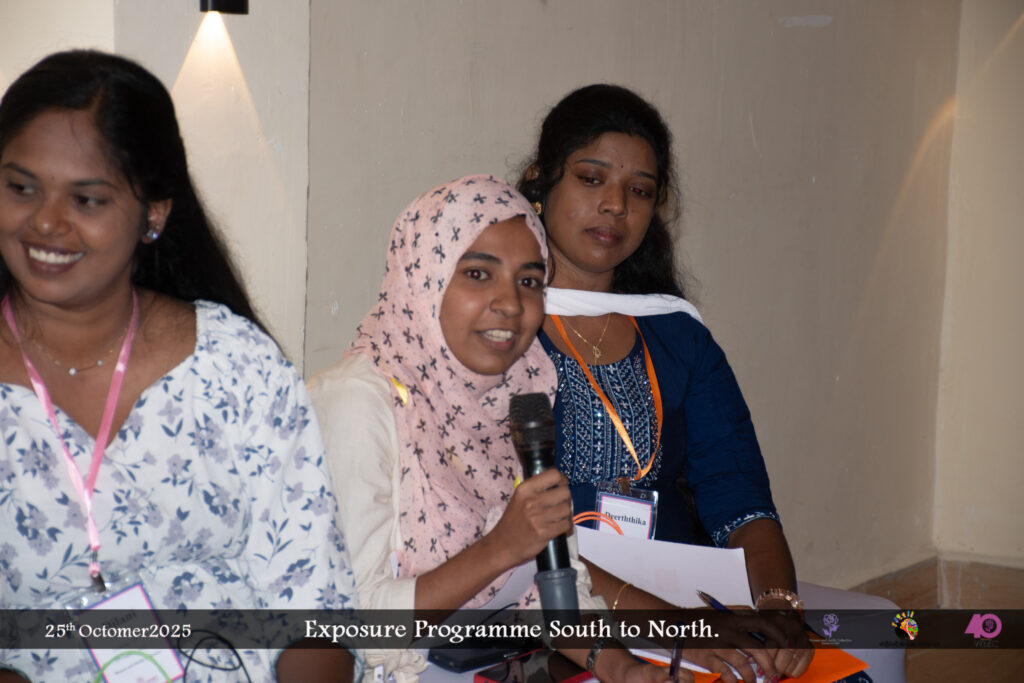
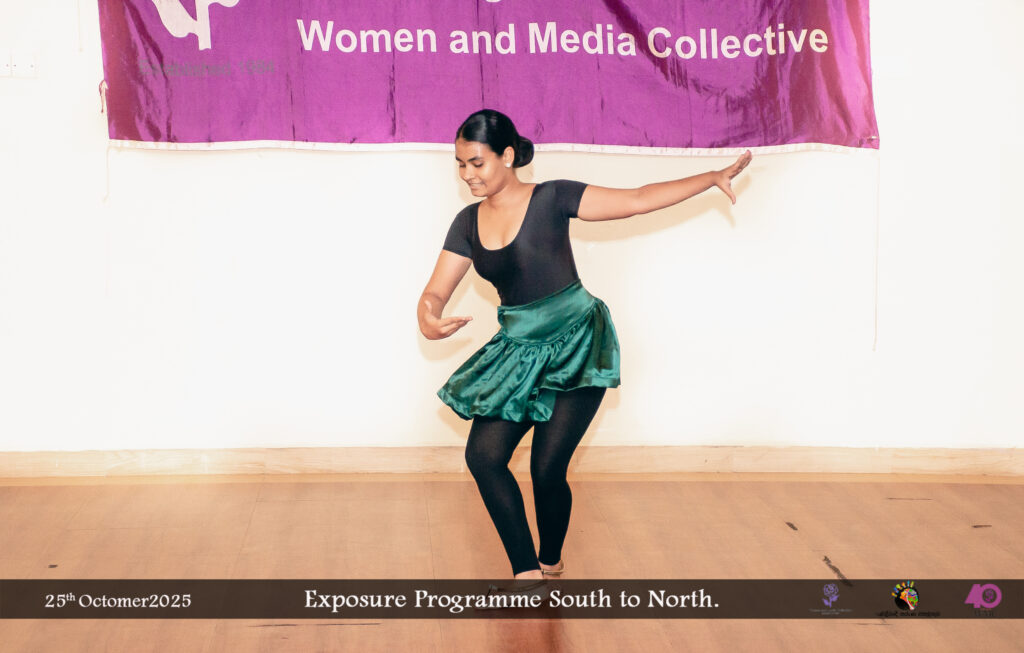
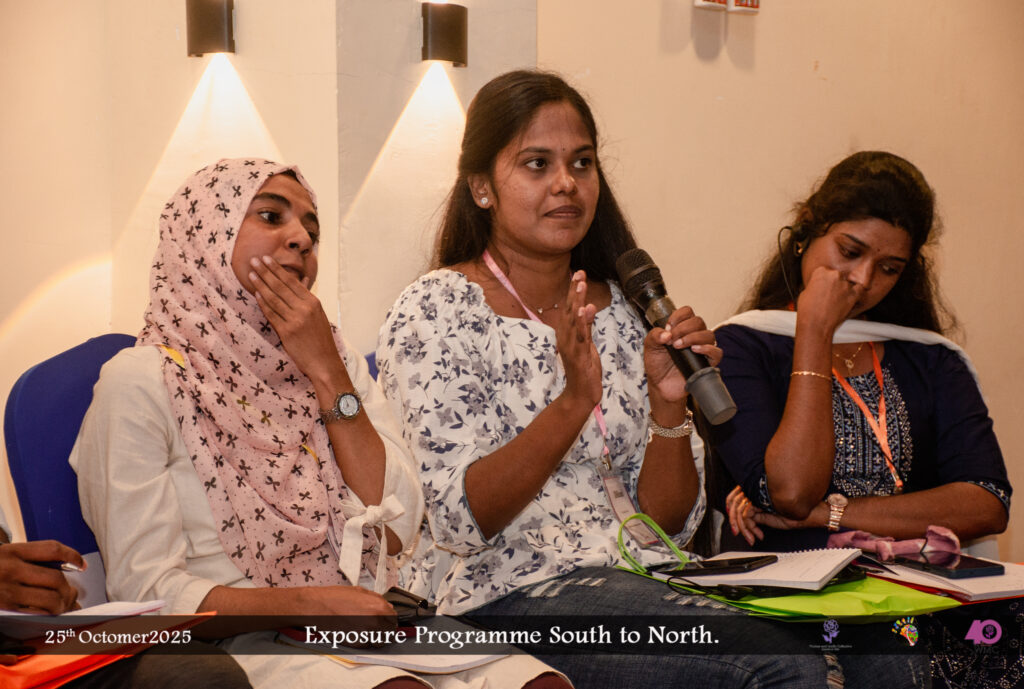
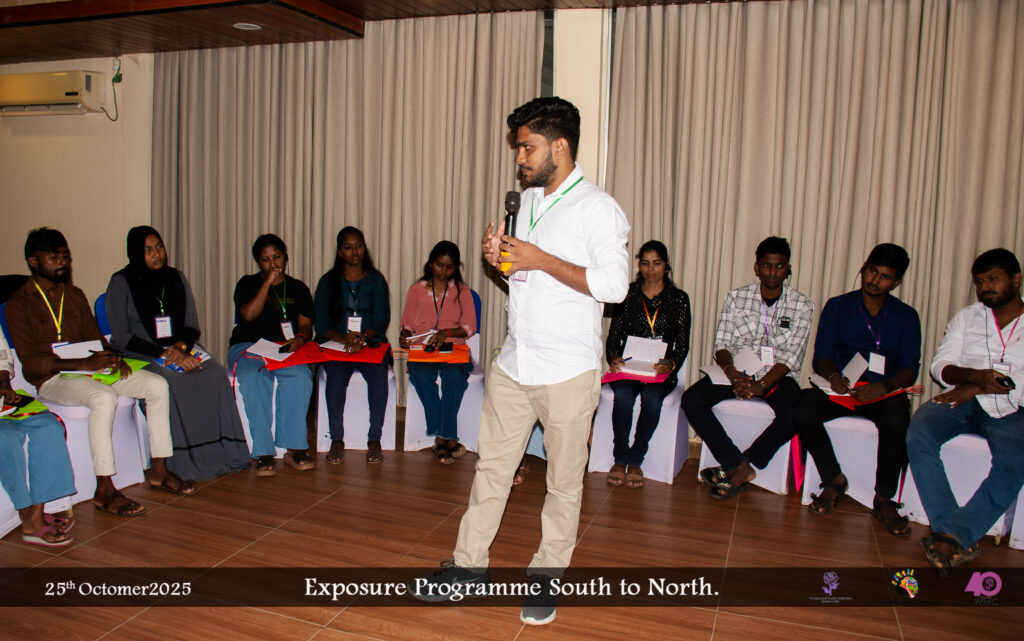
මෙම වැඩසටහන යාපනය විශ්ව විද්යාලයීය විද්යාර්ථයින් සමඟ සහයෝගයෙන් දකුණේ ස්ත්රීවාදී තරුණ කණ්ඩායම විසින් උතුරේත්, දකුණේත් අත්දැකීම් බෙදා ගැනීමේ මුලපිරීමක් වශයෙනි.
මෙම අවස්ථාවට යාපනය විශ්ව විද්යාලයේ දෙමළ සහ ඉංග්රීසි කතා කරන සිසුන් 25 දෙනෙකු කාන්තාවන් 15 දෙනෙකු සහ පිරිමින් 10 දෙනෙකු සහ දකුණු කාන්තාවාදී තරුණ කණ්ඩායමේ විවිධ පළාත් නියෝජනය කරන සිංහල සහ ඉංග්රීසි කතා කරන සිසුන් 10 දෙනෙකු කාන්තාවන් 5 දෙනෙකු සහ පිරිමින් 5 දෙනෙකු ඇතුළත් විය.
ස්ත්රීවාදී දෘෂ්ටිවාදයන් සහ ආකල්ප හරහා උතුරු සහ දකුණු තරුණයින් අතර සම්බන්ධතා වර්ධනය කිරීම සඳහා,
මෙම ව්යාපෘතියේ අන්තර්ක්රියාකාරී බ්ලොග් අඩවිය සමඟ සම්බන්ධ වීමට සහභාගිවන්නන්ට ආරාධනා කරන ලදී. පශ්චාත් යුධ සමාජ, ආර්ථික, දේශපාලනික සහ සංස්කෘතික තත්වයන් පිළිබඳ තරුණ දෘෂ්ටිකෝණයන් ඔවුන් ස්ත්රීවාදී දෘෂ්ටිකෝණයකින් බෙදා ගත්හ. කටින් කට ප්රවර්ධනය මත පදනම්ව, 2025 ඔක්තෝබර් 24 සිට 27 දක්වා පැවති උත්සවයට හින්දු, ක්රිස්තියානි, බෞද්ධ සහ මුස්ලිම් තරුණයින් 30-35 ක් පමණ සහභාගී වූහ.
මෙම වැඩසටහනට ස්ත්රීවාදී කාචයක් හරහා සමාජ-ආර්ථික, සංස්කෘතික සහ දේශපාලන යථාර්ථයන් පිළිබඳ අන්තර්ක්රියාකාරී සාකච්ඡා ඇතුළත් විය. දිගුකාලීන සිවිල් ගැටුම (1983–2009) සහ පශ්චාත් ආර්ථික/පාරිසරික අර්බුද දේශීය තරුණ තරුණියන්ට බලපා ඇති ආකාරය ගවේෂණය කිරීම සඳහා යාපනය දිස්ත්රික්කය තුළ ක්ෂේත්ර චාරිකාවක් සංවිධානය කරන ලදී. යුද්ධයෙන් පීඩාවට පත් ප්රදේශවල සහ රටේ අනෙකුත් ප්රදේශවල සිසුන් අතර සංවාදය, සහයෝගීතාවය සහ සහජීවනය වර්ධනය කිරීම සඳහා ව්යාපෘති කණ්ඩායම නිර්මාණාත්මක ක්රමවේද භාවිතා කළේය.
මූලික අරමුණු වූයේ:
ප්රධාන නිර්දේශ වශයෙන් මෙම ක්රියාකාරකම වත්මන් ව්යාපෘති අවධියේ ප්රධාන අංගයක් වූ අතර, එය පෙර අදියරේදී සිසුන් විසින් ප්රකාශ කරන ලද අදහස් සහ අභිලාෂයන් මත ගොඩනගා ඇත. ගමනේ සැලකිය යුතු කැපී පෙනෙන සිදුවීමක් වූයේ යුද්ධයෙන් සෘජුවම බලපෑමට ලක් වූ ප්රජා කණ්ඩායම් හමුවීමට අවස්ථාවයි. පුළුල් පරාසයක අදාළ ක්රියාකාරකම්වල සමාන ප්රතිඵල පෝෂණය කිරීම සඳහා වැඩසටහන් ශක්යතා අනුව පසු විපරම් සැසි දිගටම කරගෙන යාම සුදුසු බව තීරණය විය.
This program was an initiative to share experiences between the North and the South. It was run by the Feminist Youth Group of the South. They worked together with students from the University of Jaffna.
This event included 25 Tamil and English-speaking students from the University of Jaffna. Among them were 15 women and 10 men. It also included 10 Sinhala and English-speaking students from different provinces representing the Southern Feminist Youth Group. Among them were 5 women and 5 men.
The goal was to build connections between the youth of the North and South through feminist ideas and attitudes.
This program included interactive discussions on socio-economic, cultural, and political realities through a feminist lens. A field visit was organized within the Jaffna District to explore how the long-term civil conflict (1983–2009) and post-economic/environmental crises had affected local youth. The project team used creative methods to develop dialogue, cooperation, and coexistence between students from war-affected areas and other parts of the country.
The main objectives were:
As a main recommendation, this activity was a core part of the current project stage. It was built on the ideas and goals expressed by the students in the earlier stage. A major highlight of the journey was the chance to meet community groups directly affected by the war. It was decided that it is best to continue follow-up sessions based on program availability. This will help bring similar good results to more related activities.
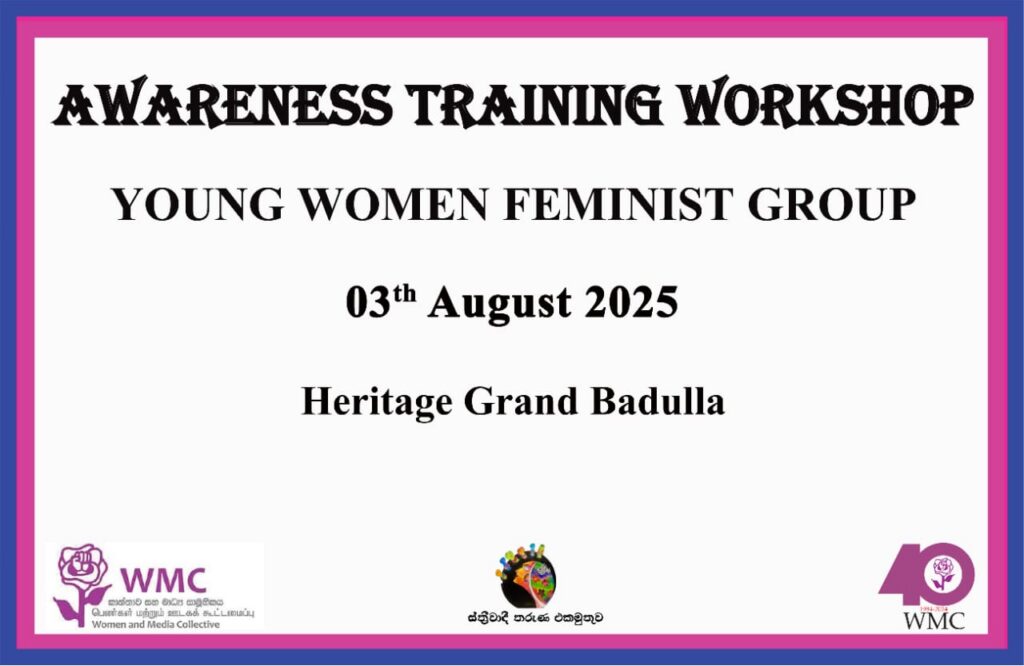
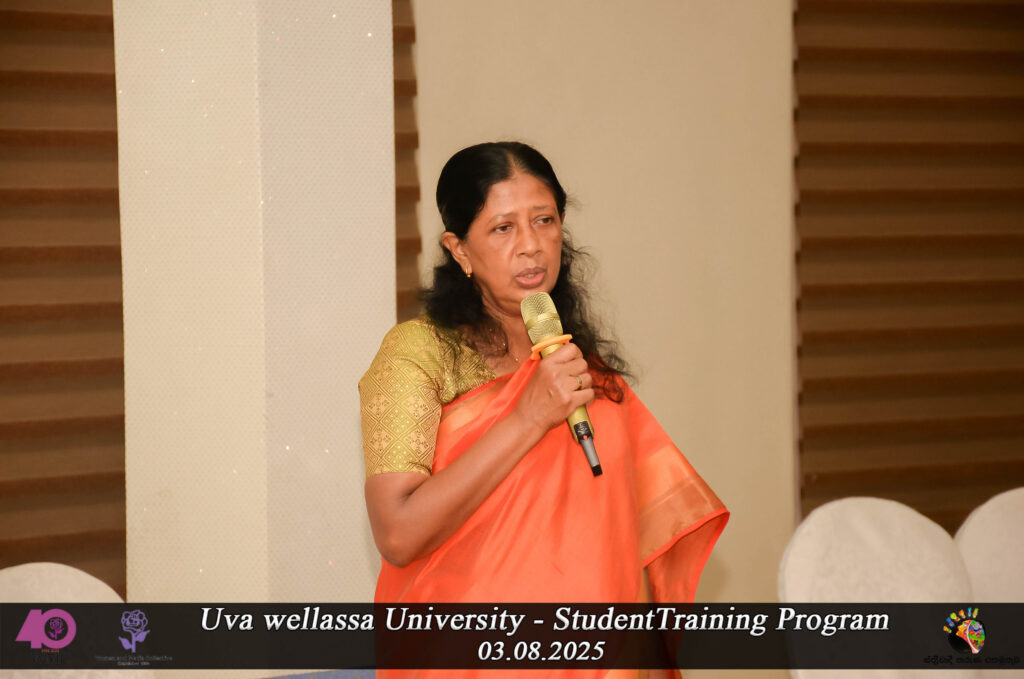
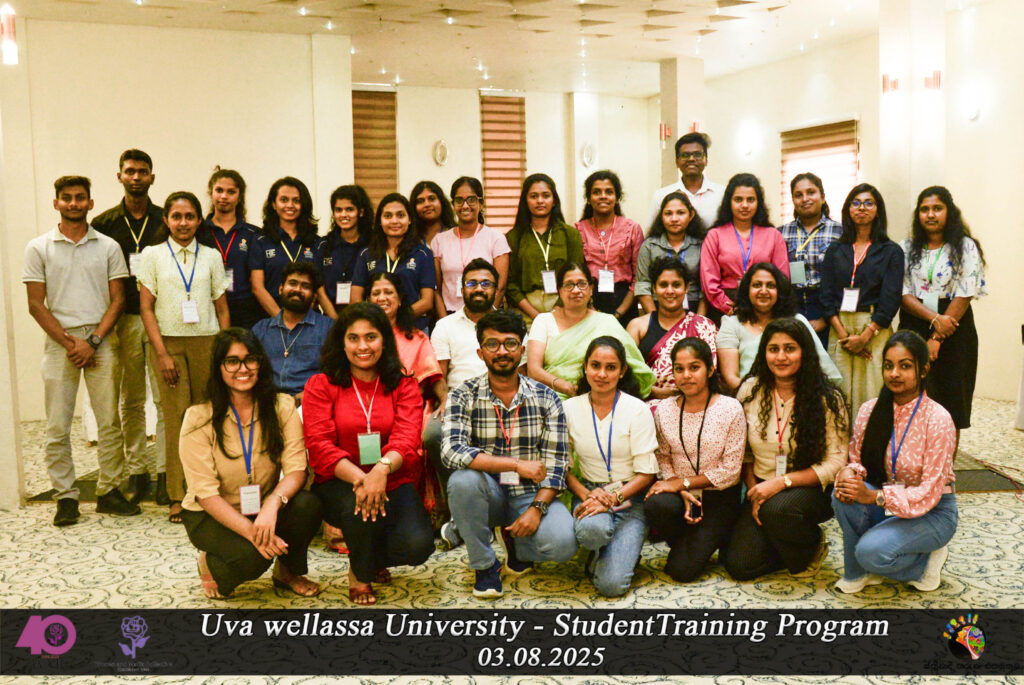
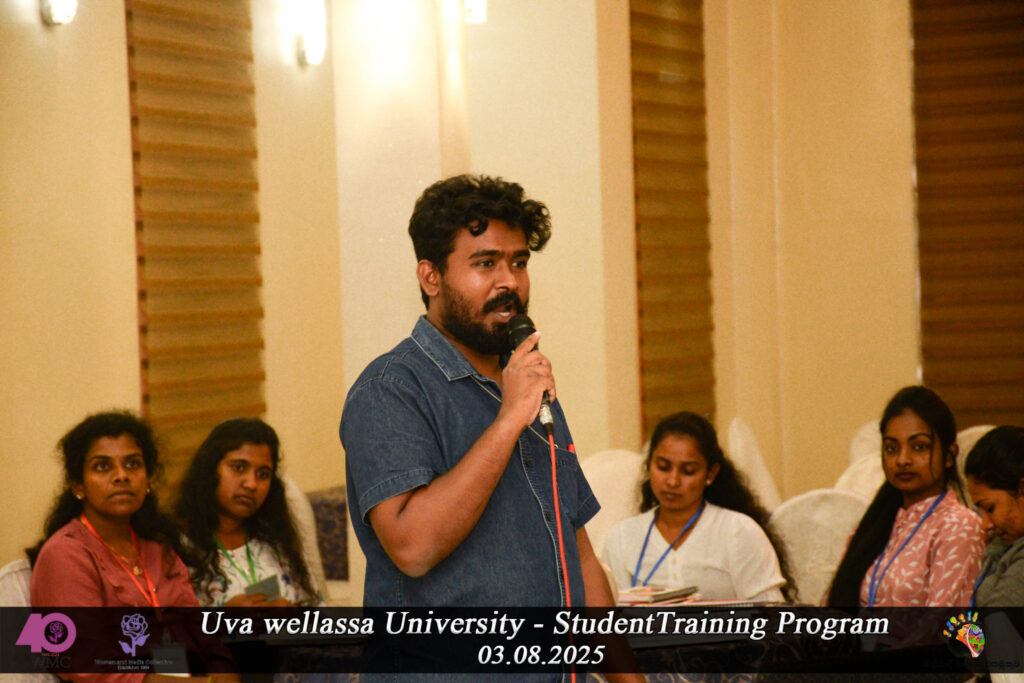
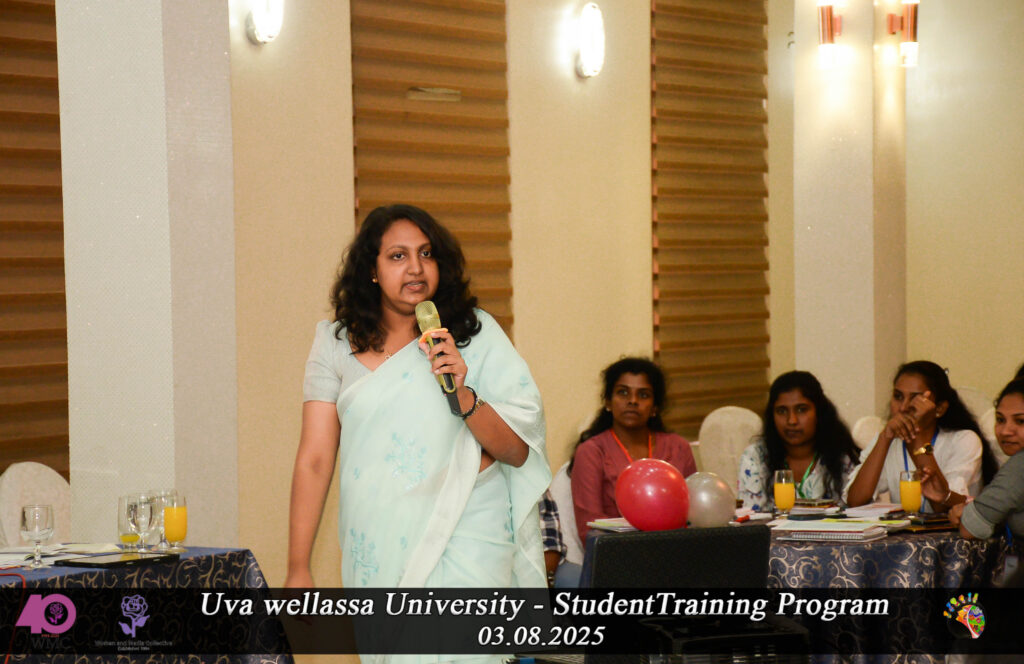
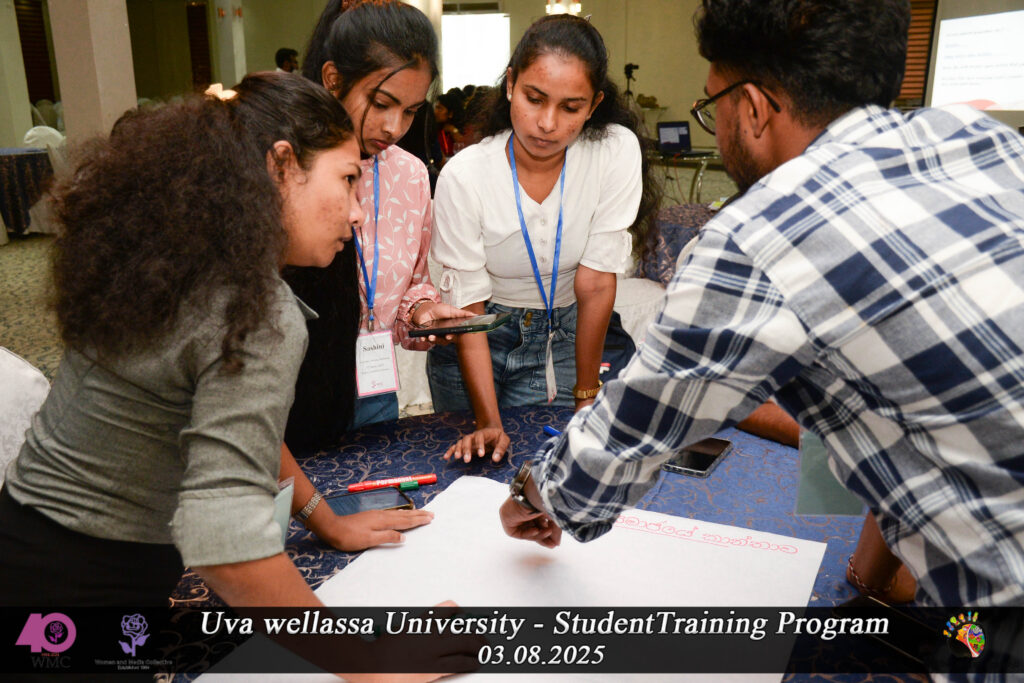
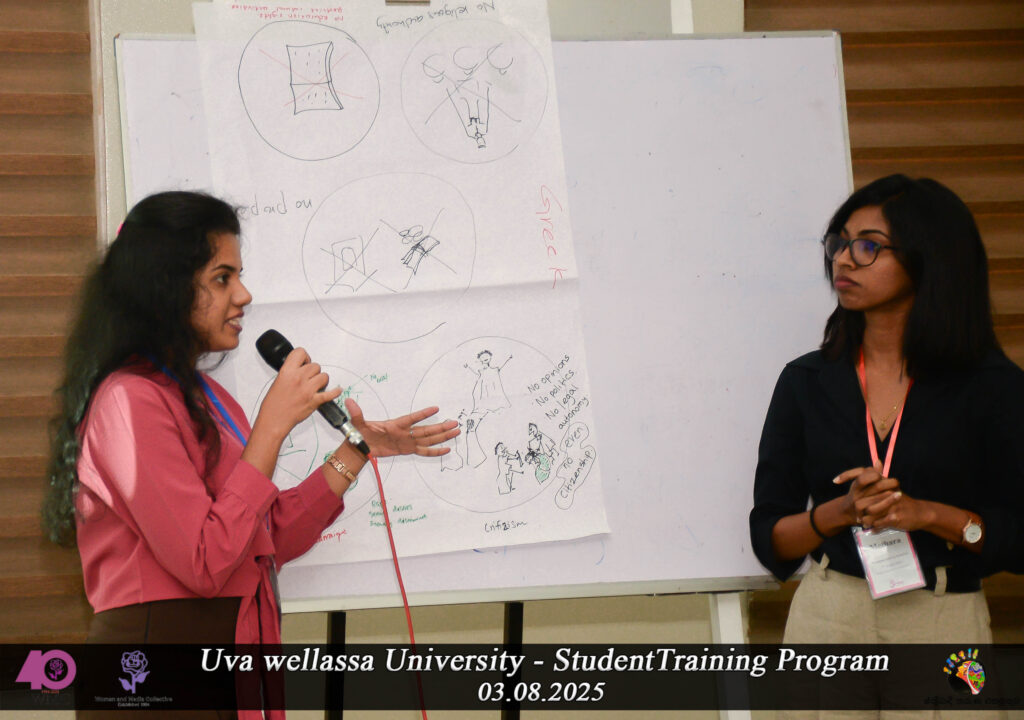
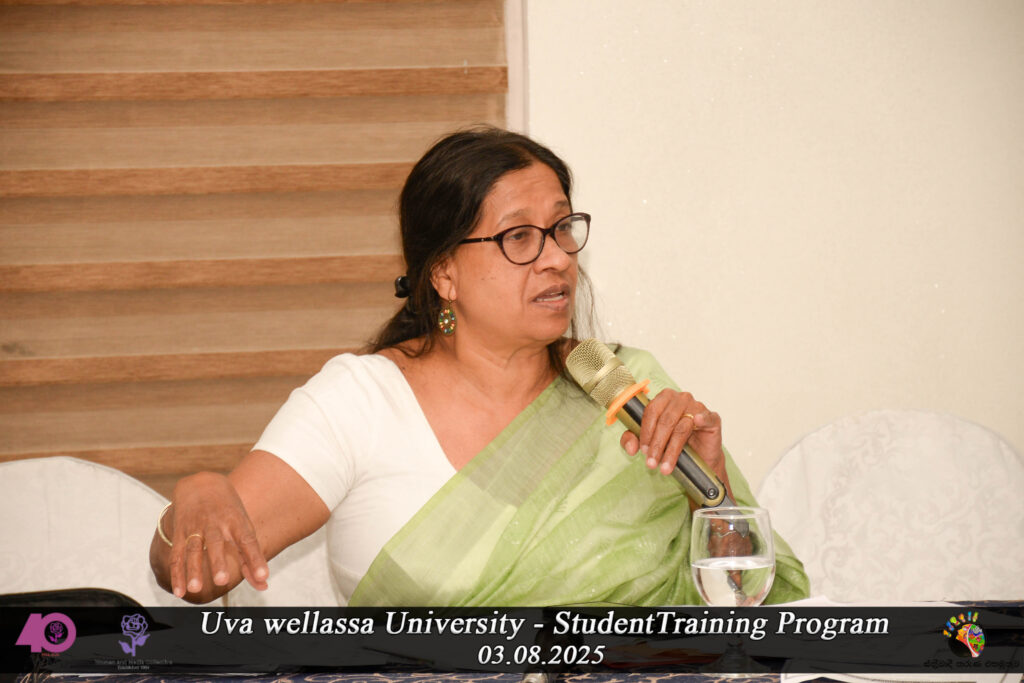
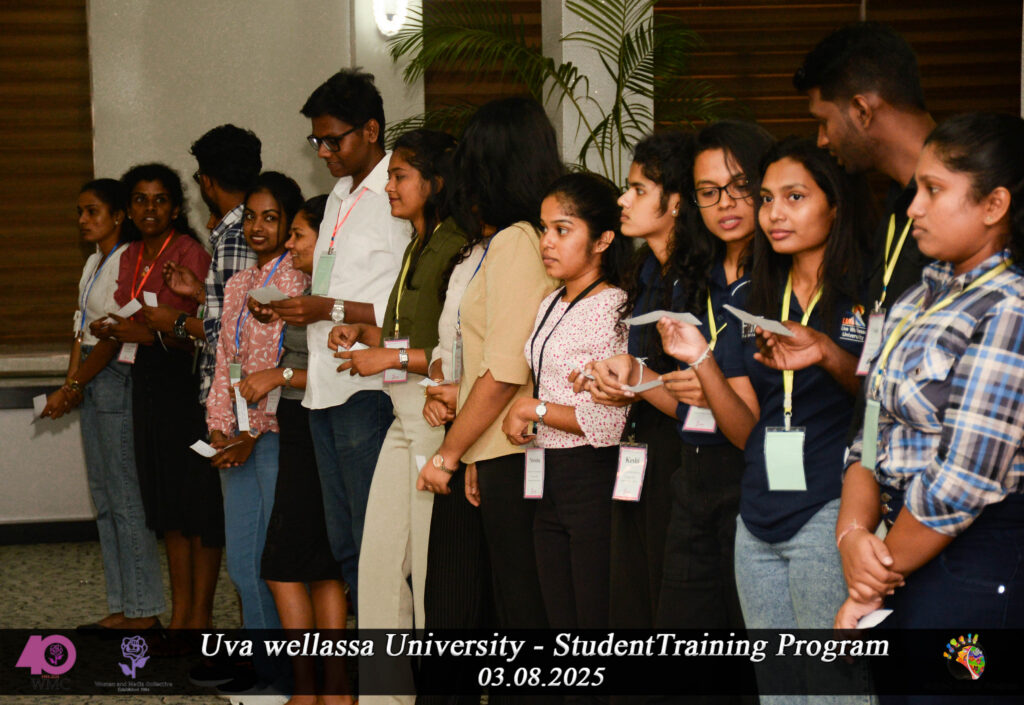
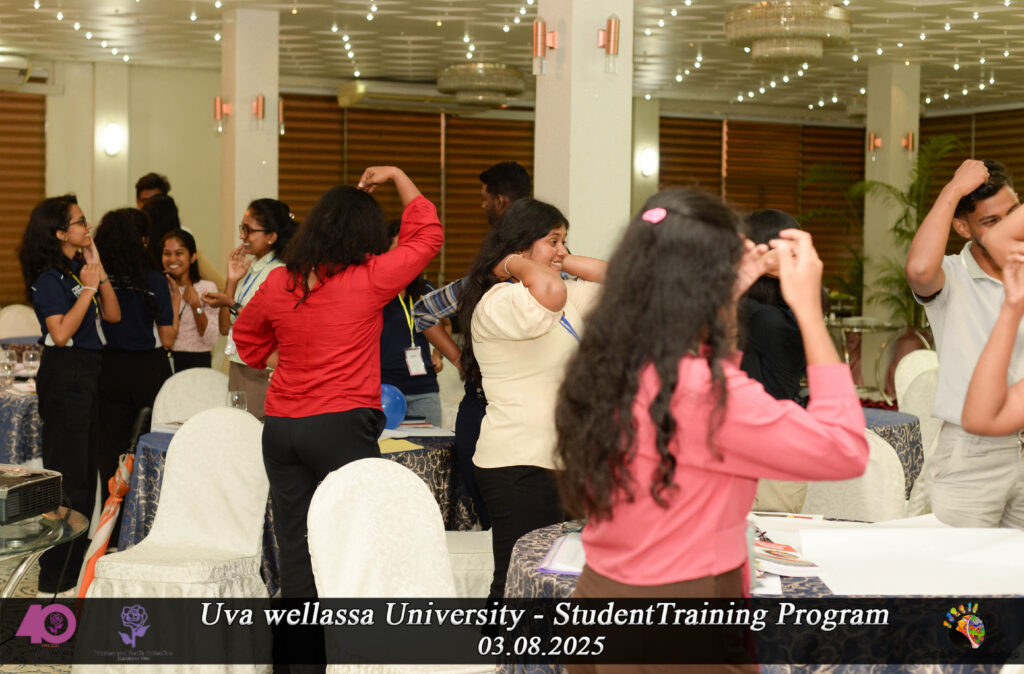
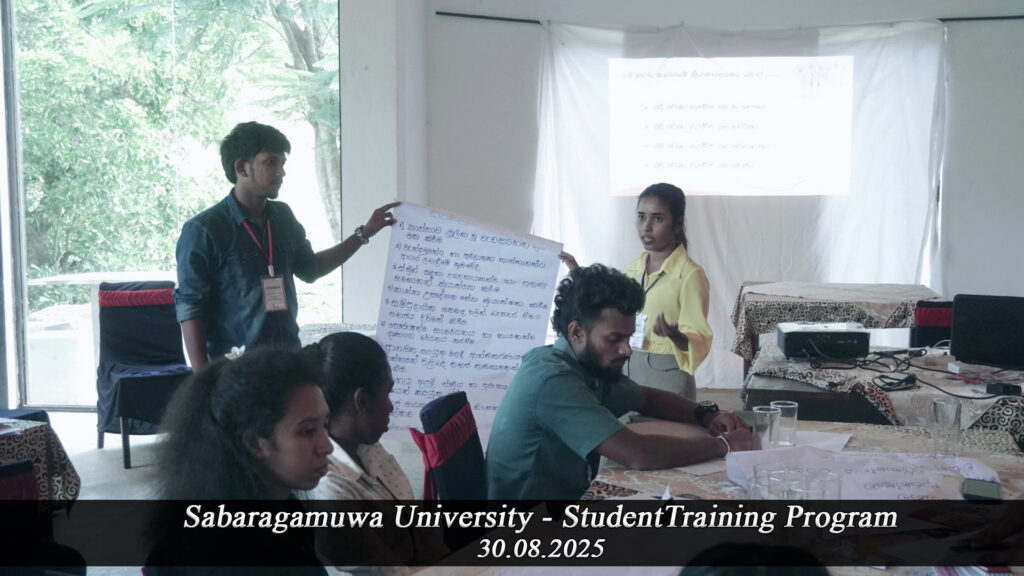
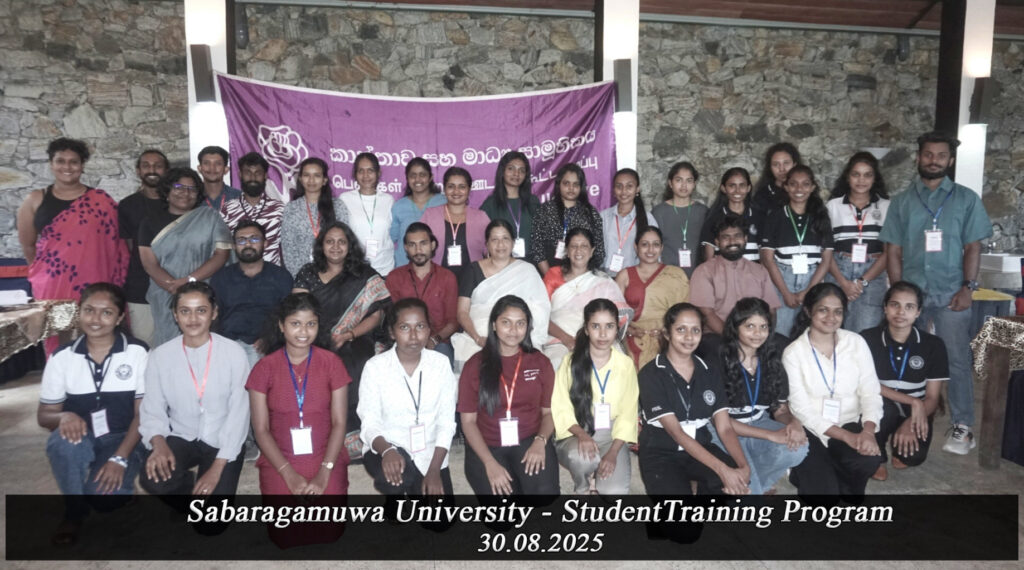
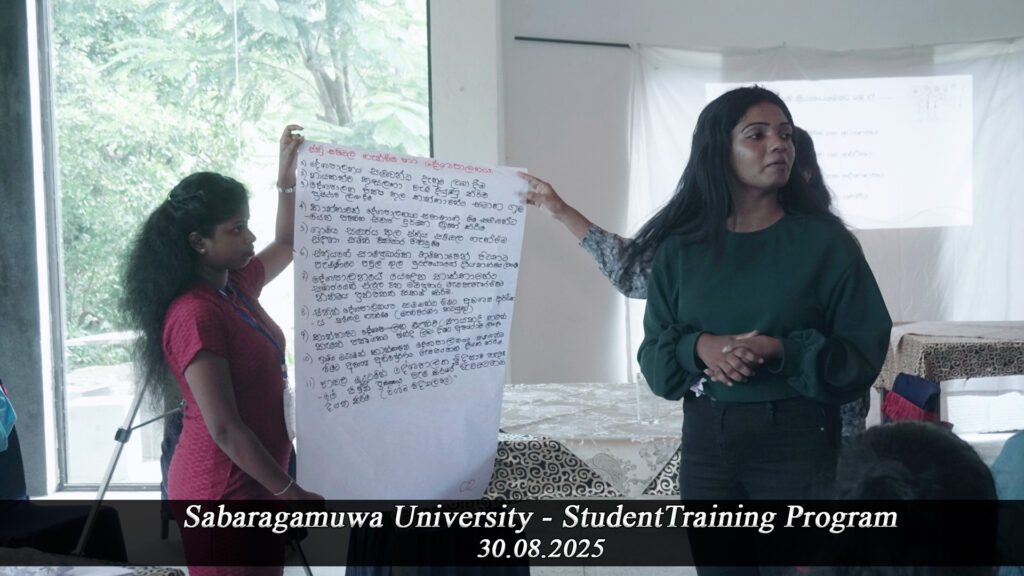
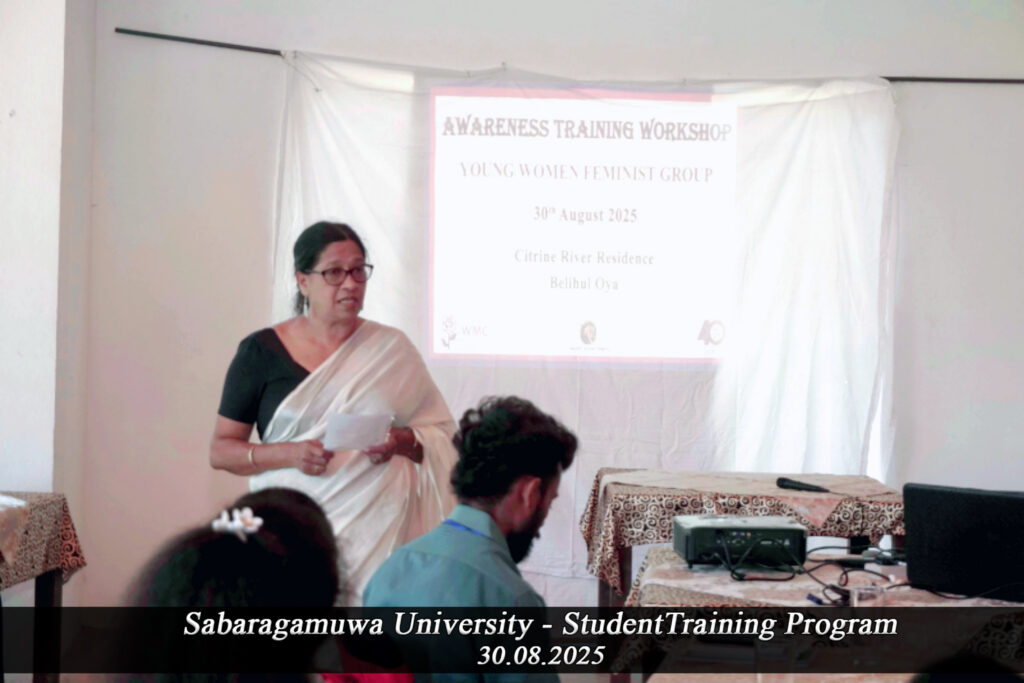
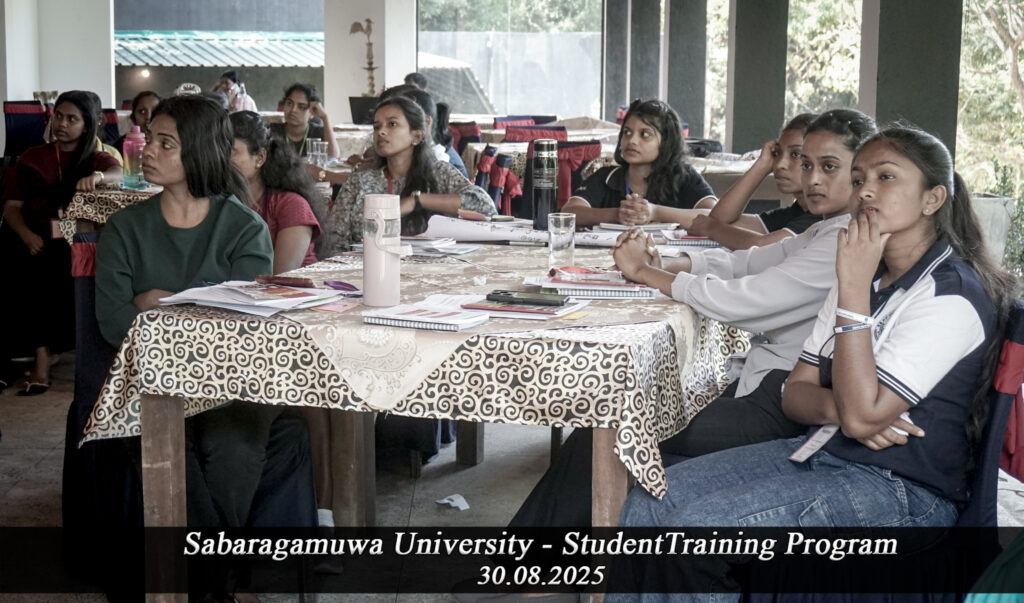
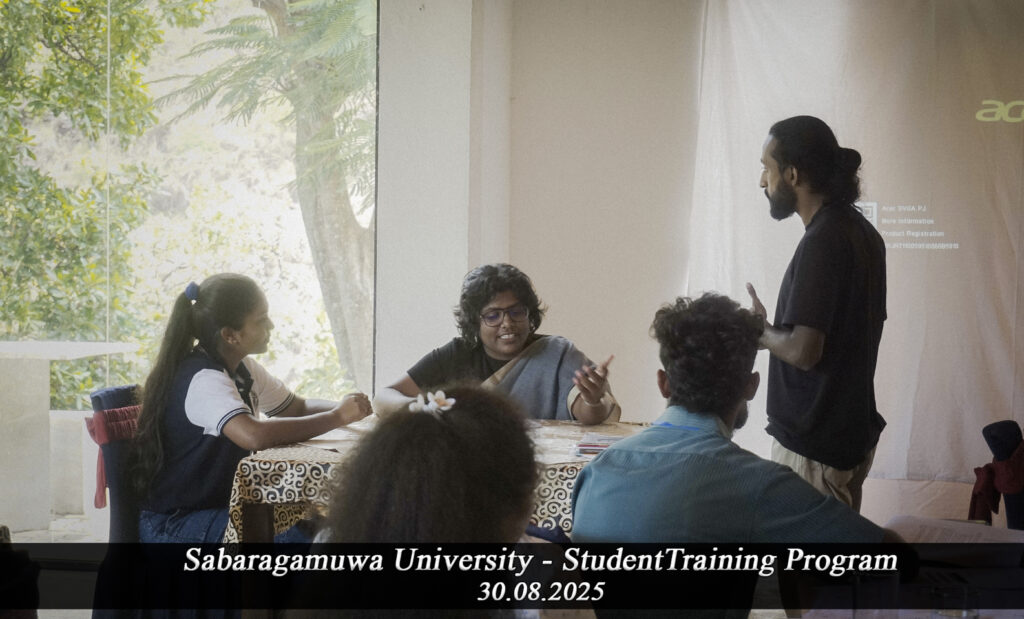
මෙම වැඩසටහන් ශ්රී ලංකාවේ ප්රධාන රාජ්ය විශ්වවිද්යාල දෙකක් වන ඌව වෙල්ලස්ස විශ්වවිද්යාලය සහ සබරගමුව විශ්වවිද්යාලය යන විශ්වවිද්යාලවල උපාධි අපේක්ෂකයින්ගේ සහභාගීත්වයෙන් පවත්වන ලදී. මෙම විශ්වවිද්යාලවල ඉගෙනුම ලබන තරුණ උපාධි අපේක්ෂකයින් අතර ස්ත්රීවාදී මතවාදයන් අවබෝධ කර ගැනීමේ තීරණාත්මක හිඩැස් පිළිබිඹු කිරීම ඉතා ජනප්රිය වී තිබුණි. මෙම ව්යාපෘතියේ මුල් අදියරේදී මෙම සිසුන් ද පරමාදර්ශී ඉලක්ක කණ්ඩායමක් ලෙස හඳුනාගෙන තිබුණි. මෙම මූලික ඇගයීම් මත පදනම්ව, පහත වැඩසටහන් සංවිධානය කර අභිරුචිකරණය කළ දැනුම ගොඩනැගීමේ මුලපිරීම් ලෙස යොදවන ලදී.
මෙම දැනුවත් කිරීමේ වැඩසටහන් මාලාව 2025 අගෝස්තු 2 සහ 3 යන දිනවල ඌව වෙල්ලස්ස විශ්වවිද්යාලයේදී සහ 2025 අගෝස්තු 29 සහ 30 යන දිනවල සබරගමුව විශ්වවිද්යාලයේදී පැවැත්විණි. සැසිවාර ප්රධාන වශයෙන් ආරම්භ වූයේ කාන්තා හා මාධ්ය සාමූහිකය සහ වැඩසටහනේ අරමුණු පිළිබඳ හැඳින්වීමකිනි.
පෙර පුහුණුකරුවන් පුහුණු කිරීමේ (TOT) සැසි මත පදනම්ව, ඌව වෙල්ලස්ස සහ සබරගමුව විශ්වවිද්යාලවල පුහුණු වැඩසටහන් දෙකක් සාර්ථකව නිම කරන ලදී. කලින් පුහුණු වූ TOT සහභාගිවන්නන් 35 දෙනාගෙන් 8 දෙනෙක් සම්පත් දායකයින් ලෙස තෝරා ගන්නා ලද අතර එමඟින් ස්ත්රීවාදයේ තිරසාරභාවය සඳහා ශක්තිමත් පදනමක් ස්ථාපිත කරන ලදී.
මෙය එක්දින පුහුණුවක් වූ අතර එහිදී ප්රධාන තේමාවන් හතරක් ආවරණය කරන ලදී. ස්ත්රීවාදය පිළිබඳ හැඳින්වීමක්, ස්ත්රීවාදයේ ඉතිහාසය, කලාව, සංස්කෘතිය සහ ස්ත්රීවාදය, සහ සහභාගීත්ව ක්රියාකාරකම් සහ කණ්ඩායම් ක්රියාමාර්ග භාවිතා කරමින් පීතෘමූලික සමාජය සහ ස්ත්රී පුරුෂ සමානාත්මතාවය අවබෝධ කර ගැනීම. සැසිවාර සඳහා නම්යශීලී සහ ප්රායෝගික ප්රවේශයක්, වැඩිදුර කියවීම, භූමිකා නිරූපණයන් සහ බෙදාගත් දෘෂ්ටිකෝණ ඇතුළත් කිරීම, සහ ඓතිහාසික දළ විශ්ලේෂණය පිළිබද සාකච්ජාවට භාජනය විය. පෙර සාකච්ඡා සංස්ලේෂණය මෙහෙයවූ පළමු උපදේශක ලෙස සුමිකා පෙරේරා මහත්මියගේ සහය ලබා දෙන ලදී.
අභියෝග සහ නිර්දේශ වශයෙන් ඌව වෙල්ලස්සේදී, සාකච්ඡා මගින් ශිෂ්යාවන් සඳහා සීමිත නායකත්ව අවස්ථා සහ ගැඹුරු විෂය දැනුමක් සඳහා ඇති අවශ්යතාවය වැනි ආයතනික අභියෝග ඉස්මතු කරන ලද අතර, නිර්දේශ මගින් අධ්යයන කව හරහා අඛණ්ඩ සහභාගීත්වය, උපාධි අපේක්ෂක මට්ටමේ කැපවූ ස්ත්රීවාදී සාක්ෂරතා සැසි, මාර්ගගත ඉගෙනුම් අවස්ථා සහ වැඩි කාන්තා සහභාගීත්වයක් අවධාරණය කරන ලදී.
අනෙක් අතට, සබරගමුව වැඩසටහන මුලදී අභියෝගවලට මුහුණ දුන්නේ කාන්තා සහභාගීවන්නන්ගේ ඉහළ අනුපාතයක් ගත නිසා වුවද කෙසේ වෙතත්, ඇගයීම් සොයාගැනීම් පිරිමි සහභාගිවන්නන් අතර සැලකිය යුතු ධනාත්මක පරිවර්තනයක් පෙන්නුම් කළේය. සහභාගීත්ව සාකච්ඡා, සාහිත්ය පාදක පැහැදිලි කිරීම් සහ කවි වැනි නිර්මාණාත්මක ක්රම හරහා පුහුණුව ඵලදායි ලෙස ස්ත්රී පුරුෂ භාවය පිළිබඳ සම්මතයන් සහ ස්ත්රී පුරුෂ භාවය පිළිබඳ අනන්යතාවය ආමන්ත්රණය කළේය. ප්රධාන නිර්දේශ අතරට උපදේශන උත්සාහයන් ශක්තිමත් කිරීම, අධ්යයන හා පුහුණු රාමු තුළට සෘජු ස්ත්රීවාදී අධ්යයන ඒකාබද්ධ කිරීම, ස්ත්රී පුරුෂ භාවය මත පදනම් වූ ප්රචණ්ඩත්වය කෙරෙහි අවධානය යොමු කළ වැඩ කණ්ඩායම් ස්ථාපිත කිරීම සහ අඛණ්ඩ සාකච්ඡා සහ අධ්යයන කව ඇතුළත් විය. සාම්ප්රදායික මානසිකත්වයෙන් ඉවත් වී සියලුම ආයතනික හා සමාජ ව්යුහයන් හරහා ඇතුළත් වන ස්ත්රීවාදී දෘෂ්ටිකෝණයන් අනුගමනය කිරීමට සහභාගිවන්නන් දිරිමත් කිරීම කෙරෙහි ද අවධාරණය කරන ලදී.
These programs were conducted at two main state universities in Sri Lanka, the Uva Wellassa University and the Sabaragamuwa University, with the participation of their undergraduates. Reflecting on the critical gaps in understanding feminist ideologies among the young undergraduates studying at these universities had become highly popular. These students were also once identified as an ideal target group during an earlier phase of the same project. Based on these initial assessments, the following programs were organized and deployed as customized knowledge-building initiatives.
This series of awareness programs was held on August 2nd and 3rd, 2025, at the Uva Wellassa University, and on August 29th and 30th, 2025, at the Sabaragamuwa University. The sessions mainly began with an introduction to the Women and Media Collective and the objectives of the program.
Based on previous Training of Trainers (TOT) sessions, two training programs were successfully completed at Uva Wellassa and Sabaragamuwa Universities. Out of the 35 previously trained TOT participants, 8 were selected as resource persons, thereby establishing a strong foundation for the sustainability of feminism
This was a one-day training program that covered four main themes. These themes were an introduction to feminism, the history of feminism, art, culture and feminism, and understanding patriarchal society and gender equality using participatory activities and group actions. The sessions used a flexible and practical approach, which included further reading, role-plays, shared perspectives, and a discussion on a historical overview. Mrs. Sumika Perera supported the program as the first consultant, and she led the synthesis of the previous discussions.
Challenges and recommendations, institutional challenges such as limited leadership opportunities for female students and the need for deep subject knowledge were highlighted through discussions at Uva Wellassa. Meanwhile, the recommendations emphasized continuous participation through academic circles, dedicated feminist literacy sessions at the undergraduate level, online learning opportunities, and increased female participation. Sabaragamuwa: On the other hand, although the Sabaragamuwa program initially faced challenges due to a high rate of female participants, evaluation findings showed a significant positive transformation among male participants.
The training effectively addressed gender norms and gender identity through creative methods such as participatory discussions, literature-based explanations, and poetry. Key recommendations included strengthening advocacy efforts, directly integrating feminist studies into academic and training frameworks, establishing working groups focused on gender-based violence, and continuous discussions and academic circles. Emphasis was also placed on encouraging participants to break away from traditional mindsets and adopt inclusive feminist perspectives across all institutional and social structures.