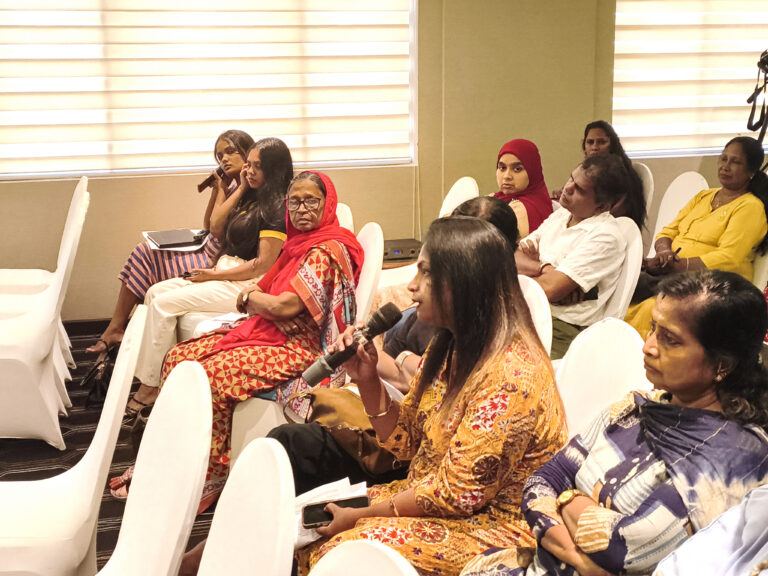
International Day of Care Press Conference: Women Unpaid Care Workers and Labour Rights

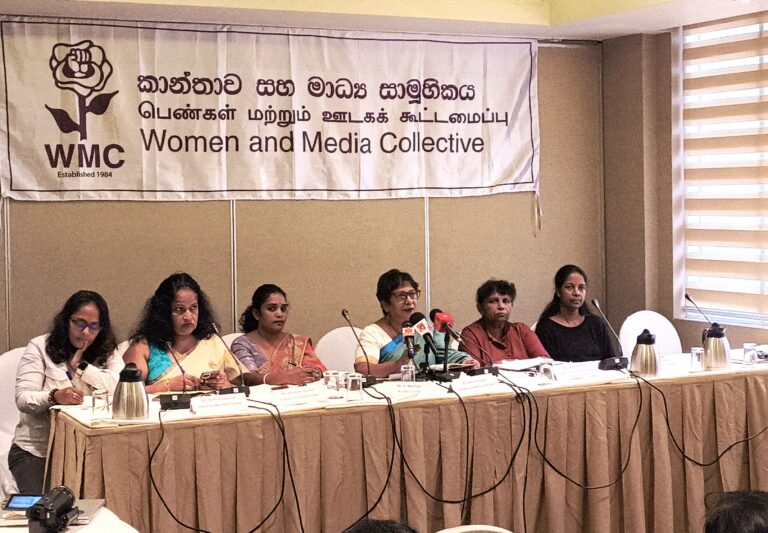
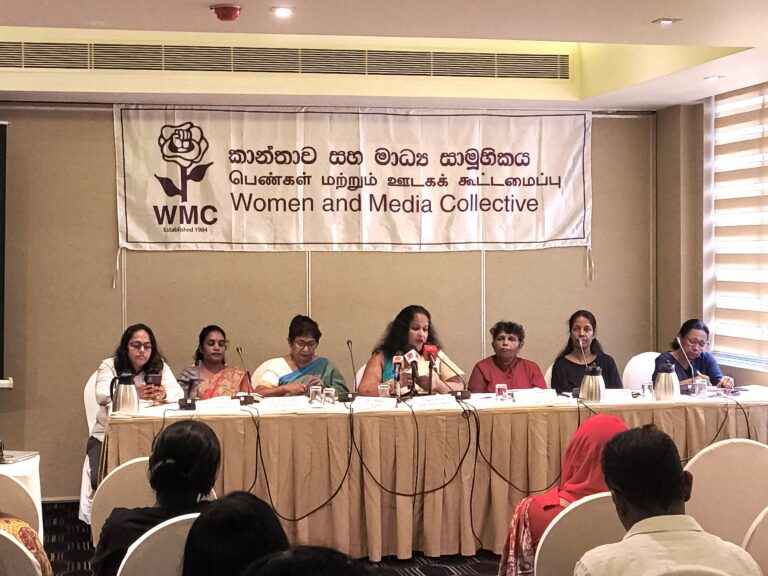
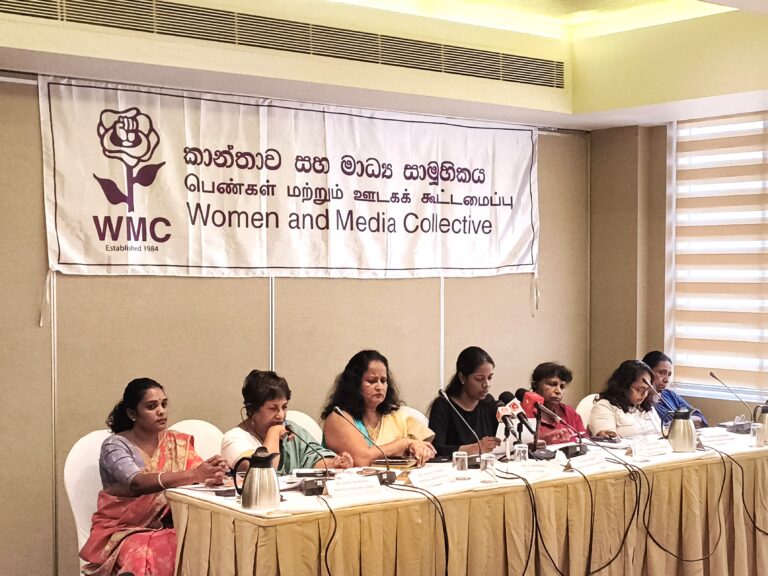
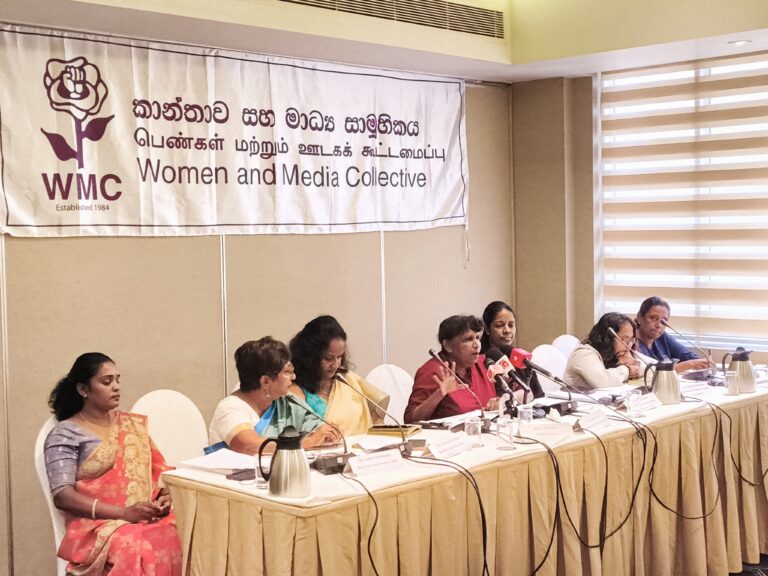
In commemoration of the International Day of Care and Support, Women and Media Collective organised a press conference bringing together women trade unions leaders representing Free Trade Zones, plantation workers and domestic workers to highlight how unpaid care work affects women workers’ livelihoods, working conditions, and rights.

The discussion and press briefing highlighted the challenges that women workers face due to the unequal distribution of unpaid care work responsibilities within families and emphasized the need for gender responsive labour laws that recognise women’s unpaid care labour responsibilities and protect their labour rights.

The press conference featured representatives from the following women-led trade unions and workers’ associations:

  • Dabindu Collective Union
    • Dabindu Collective Union is a women-led trade union and built strongly by utilizing Dabindu Collective’s 39 years of experience as a civil society organisation. Dabindu has worked actively and tireslessly to mobilize and collectivise women workers; empower workers with knowledge about human rights, women’s rights and labour rights; and strengthen women workers’ leadership. In recent years Dabindu has expanded its work from the Katunayake FTZ to industrial areas in Kilinochchi and Vavuniya in the Northern Province.
  • Protect Union
    • The Protect Union is a trade union registered with the Department of Labour in Sri Lanka, organizing to secure the rights of private-sector and informal sector workers. As a member of the International Domestic Workers Federation (IDWF) and an organisation that collaborates with the International Labour Organisation (ILO) the Protect Union operates as an “umbrella union”
  • Stand Up Movement Lanka.
    • Stand Up Movement Lanka (SUML) is a women-led grassroots civil society and worker-rights trade union founded in 2008 by twelve young migrant workers from Sri Lanka’s Free Trade Zones and formally registered in 2014. SUML works with garment and FTZ workers, migrant workers, sex workers, LGBTQI+ workers, platform workers and other marginalised communities to advance labour rights, gender equality, climate justice, social inclusion, access to justice and decent work. Through worker organising, leadership development, legal support, participatory research, policy advocacy, digital tools such as WAVE, and safe spaces such as Solidarity Bridge, SUML strengthens workers’ collective voice and supports them to claim their rights, dignity, safety and social protection.
  • Textile Garment and Clothing Workers Union (TGCWU)
    • The Textile Garment and Clothing Workers Union (TWCGU) is an independent, women-led trade union committed to protecting and promoting the rights of workers in the textile and garment industries. With over 25 years of experience advocating for labour rights, women’s rights and human rights, the union works particularly to promote women workers’  job security, fair working conditions and equal opportunities, while taking collective action against discrimination and injustices in the workplaces.
  • The RED Workers Union
    • The Revolutionary Existence of Human Development (RED) Workers Union was established in the year 2022 with an intention to serve the women and women workers (especially the widows and single mothers who are working in Katunayake, Biyagama, Wathupitiwella FTZs) and later expanded its service island wide. While serving their members, RED works against all kinds of repression, oppression and discrimination against women by amplifying their voices for justice and social dignity.

The demands made by the women trade union leaders looking at the intersection of labour rights and unpaid care work of women in the FTZs, plantation sector and domestic work sectors were as follows:

  1. Quality, affordable and accessible day care services for children, elderly and persons with disabilities for women employed in the formal and informal sectors.
  2. Sufficient paid leave or flexible leave to care for sick children and family memers.
  3. Access to social protection and employment-related benefits for manpower workers and domestic workers.
  4. Sufficient information on maternity rights, social protection and available care services, especially for workers in the Northern Province.
  5. Job security of FTZ workers, manpower workers, domestic workers who have to take up unpaid care work responsibilities in the family.
  6. Ensured women’s access to justice by providing quality and affordable day care services.
  7. Psychological support for female workers who manage both income earning activities and unpaid work.
  8. Improved national policies and statistics on unpaid care work.
  9. A sex-disaggregated national level data system on domestic workers, manpower workers and platform workers.
  10. Ratification of ILO C175 on part-time workers, ILO C183 Maternity Protection Convention, and ILO C189 Domestic Workers’ Convention.
  11. Enactment of new workplace anti-harassment laws or amendment of existing labour and criminal legislations to implement C190 nationally.


Read the full media briefs below: