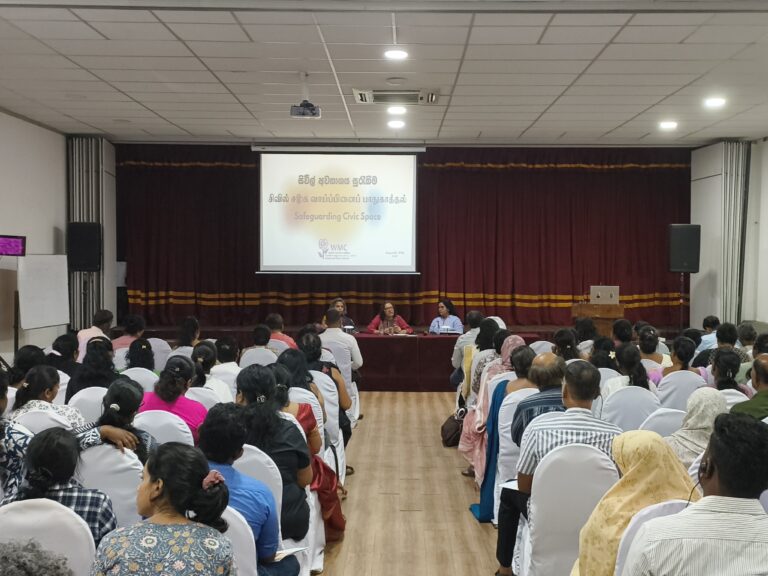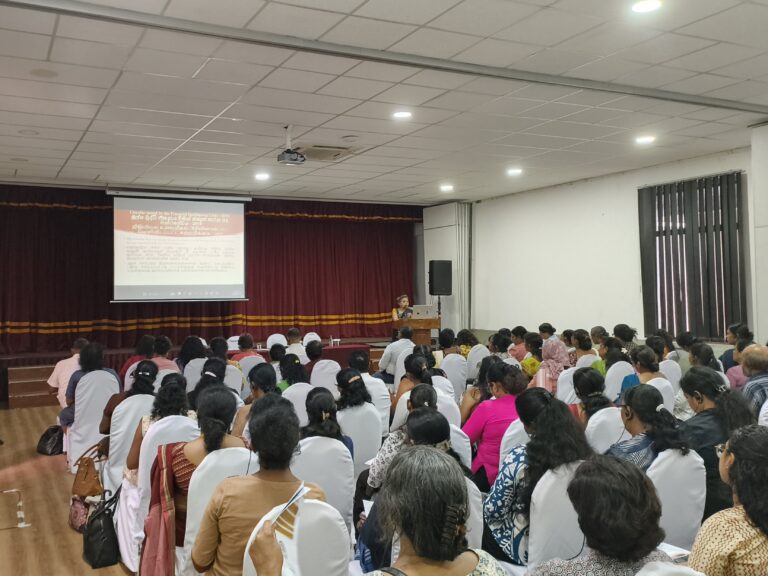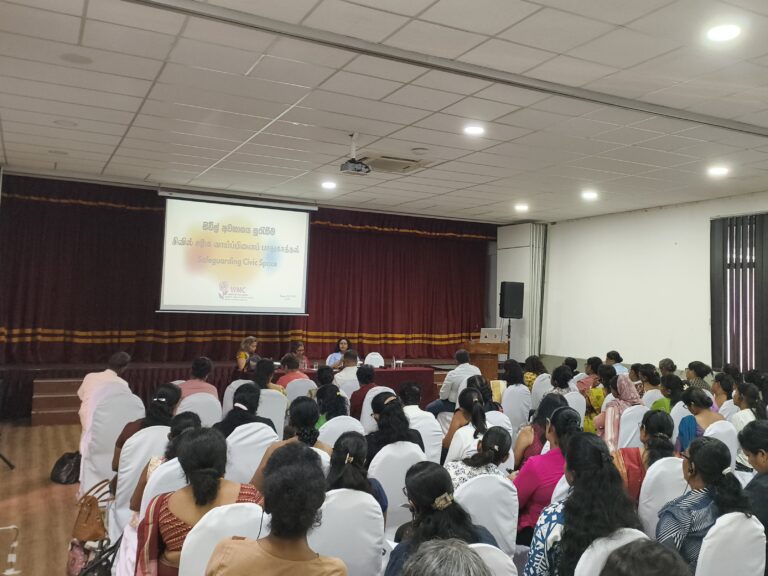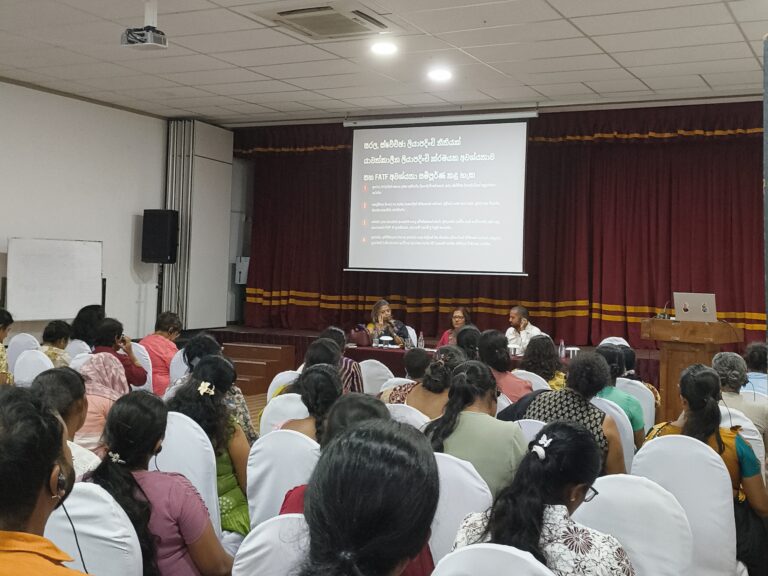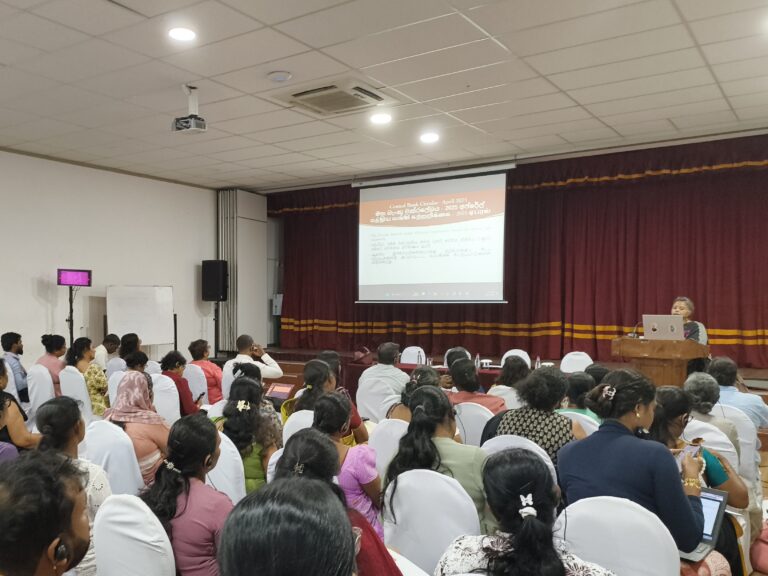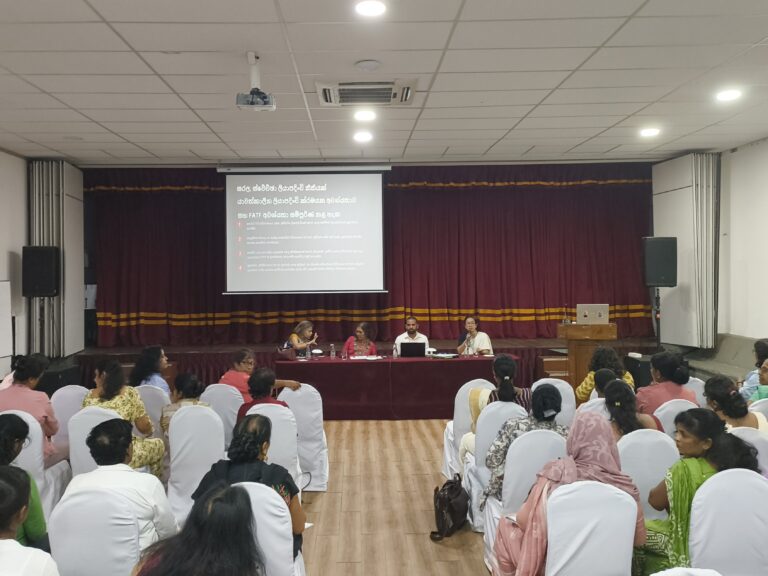
On 24th August 2026, the Women and Media Collective (WMC) convened a discussion with representatives of women’s rights organisations and civil society organisations on the draft NGO (Registration and Supervision) Bill 2026 at the Sri Lanka Foundation Institute.
The meeting brought together 110 civil society activists and representatives from 17 districts — Anuradhapura, Badulla, Colombo, Galle, Gampaha, Hambantota, Jaffna, Kandy, Kurunegala, Mannar, Matara, Monaragala, Mullaitivu, Nuwara Eliya, Polonnaruwa, Puttalam and Trincomalee.
The draft Bill was publicly circulated in July 2026 on the stated basis that it is necessary for Sri Lanka’s compliance with the standards set by the Financial Action Task Force (FATF) which is the global, inter-governmental watchdog countering terrorism financing and money laundering.
Participants raised serious concerns about the breadth and scope of the proposed legislation. The Bill defines a “non-governmental organisation” extremely broadly, extending beyond organisations traditionally understood as NGOs to include voluntary social service organisations, non-governmental microfinance organisations, organisations incorporated by Parliament, and a wide range of associations, councils, community hostels, foundations, federations, movements, centres, consortia and other community-based organisations.
If enacted the law will make it a requirement for any such organisation to register with a newly appointed ‘competent authority’ under the purview of a Minister/Ministry as yet unnamed. The competent authority would also have extensive powers to regulate, review and monitor registered organisations and their activities. These include powers to enter NGO premises without a warrant, with prior notice, and to access and examine records, including records subject to confidentiality arrangements.
The provisions of the draft Bill severely curtails the independence and autonomy of a spectrum of civil society organisations from the village and community level to the national. It infringes the rights guaranteed in the Constitution to the freedom of Assembly, Association and Expression.
The discussion also situated these concerns within the longer history of civil society–State relations in Sri Lanka. Women activists noted that NGOs and CSOs have historically faced harassment, intimidation, threats and other forms of pressure from State entities. Against this background, participants were concerned that the proposed legislation could further expand State control and oversight, intensify existing pressures, and create a more restrictive environment for organisations working to advance human rights, gender equality, social justice and democratic participation.
Critically, participants also examined the FATF standards cited to the legislation. The discussion highlighted concerns that the proposed framework does not reflect the FATF’s emphasis on targeted, proportionate and risk-based measures, but instead risks imposing broad and disproportionate regulatory requirements across civil society.
The meeting provided an important space for women’s organisations from across Sri Lanka to share experiences, assess the potential gendered impacts of the proposed legislation, and discuss the need for collective action to protect civic space, freedom of association and the autonomy of women’s rights and civil society organisations.
The Conversation and activism will continue. Women’s organisations will continue to work together to defend civic space and ensure that regulation of civil society does not become a mechanism for restricting rights, dissent and democratic participation.